Maaki: changing women’s lives through digital access
In villages across Al Minya in Egypt, a phone is becoming more than a connection. For thousands of women, it’s a way to earn, learn and be seen differently at home.
The women communities already trust
Watch how the Maaki programme is creating opportunity through connection
The most powerful Maaki stories aren’t about an app or a referral model. They’re about what happens when a woman who has often been left outside the digital economy becomes the person others turn to.
In villages across Al Minya in Upper Egypt, Vodafone Egypt has trained local women to become Maaki ambassadors. They introduce useful digital and financial services, including Vodafone Cash, to neighbours, relatives, shopkeepers and families they already know.
For Yasmine Tarek-Desouky, Senior Manager: Purpose and Sustainable Business at Vodafone Egypt, that trust is what makes the programme work. Maaki, she says, “aims to bridge the rural gender digital divide while empowering rural women socially and economically”.
In one ambassador’s home, the change was seen first by her children. “My kids started to see that I have a role, that I’m not just a follower. I have a role in society. I have a role in the community.”
More than extra income
Meet Esther: a mother from Malawi whose digital skills are helping her provide for her family
Since launching in September 2025, Maaki has onboarded around 2 700 ambassadors across more than 26 villages. The women receive digital, cybersecurity and financial literacy training, with app, hotline and call-centre support.
About 48% of ambassadors earned more than 100 Egyptian pounds (about $2), while some achieved more than E£3 000 in a month. But the deeper impact is in what that money makes possible. Ambassadors have used their income for school fees, marriage costs and household needs. One high-performing ambassador was able to place her daughter in nursery. Another, university-educated but unable to continue her studies, found in Maaki the push to pursue a master’s degree.
These are not small shifts. Nursery can mean time to work. School fees can mean continuity. A mobile wallet can mean receiving and managing money directly. As Yasmine puts it, Maaki is “turning the unbanked women into banks” by giving them a first route into formal financial services through Vodafone Cash.
Built around trust
Understanding Maaki: digital skills, real impact
Rural women are central to Maaki because they are central to family and community life. “Women here in Egypt are very influential,” says Yasmine. “And they have an influence on the psychological wellbeing of their families, their economic wellbeing, as well as their financial wellbeing.”
That influence matters where digital access is uneven and many women work in vulnerable informal jobs. Maaki doesn’t treat women as passive beneficiaries. It recognises them as connectors who understand the questions, hesitations and rhythms of village life.
The programme also works with families. In some communities, a woman’s ability to work depends on support at home, so husbands are brought into the conversation and shown the purpose of the programme. Acceptance is built with the community, not carried by women alone.
What this means for Vodacom
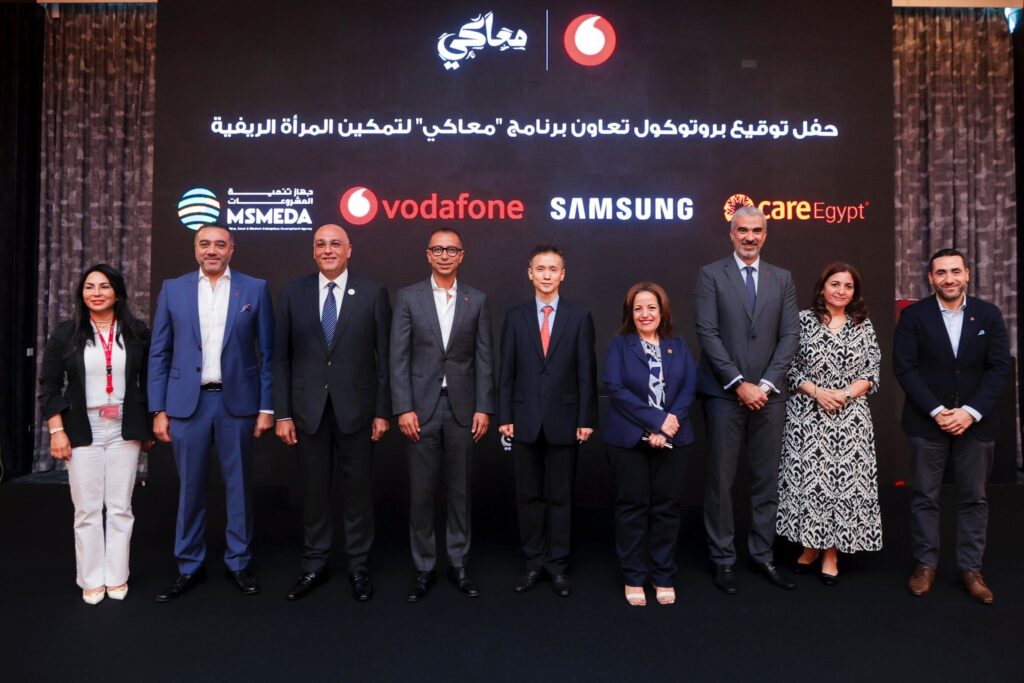
Maaki launch event
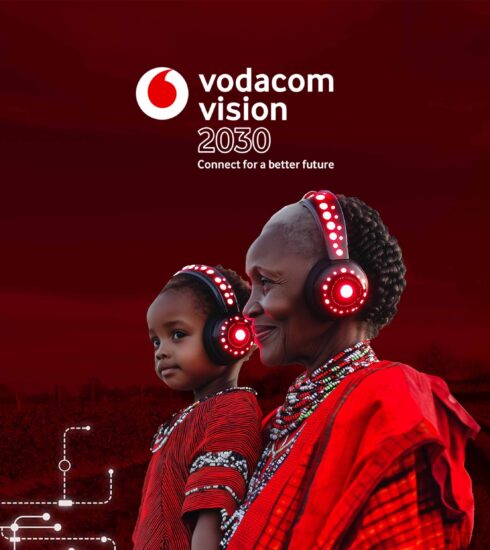
Maaki is Vision 2030 made human. It connects purpose with growth: more people using helpful digital and financial services, and more women earning, learning and building confidence as they do it.
The ambition is to improve the lives of one million rural women through digital and financial inclusion. Next steps include stronger training, improved app features, continued network support and pathways into entrepreneurship.
“We don’t want them to be only working with Vodafone,” Yasmine says. “We want to help them with fulfilling their dreams.”
For all of us across Vodacom, Maaki is a reminder that Vision 2030 is not only about scale. It is also about whether digital and financial access becomes useful in daily life: helping women earn, manage money, support their families and take up a more visible role in their communities.
Bongi Mbuli, Group Executive Head: Internal Communications, Vodacom Group Sian Singh, Senior Specialist: Internal Communications, Vodacom Group Content contribution: Our thanks to the internal communications teams and representatives from the Vodacom Group of companies One Spirit is edited, designed and published on behalf of Vodacom Group by Media24 (Pty) Ltd
CREDITS
Cover image: Getty Images & Adobe Firefly Photographs, videos and illustrations: Supplied by Vodacom Group, Adobe Stock, Adobe Firefly, Gallo Images, Getty Images & Google Gemini
DISCLAIMER
This communication is an internal magazine for employees of the Vodacom Group of companies that is intended solely for use by Vodacom Group employees and authorised representatives. Copyright 2026, Vodacom. All rights reserved. While all precautions have been taken to ensure accuracy of information, neither the editor, publisher nor Media24 can be held liable for any inaccuracies, injury or damage that might occur.
All content, information, artwork and opinions are Classified as C1, as per Cyber Security Restrictions.