Words matter: your guide to inclusion in action
A small word. A single phrase. Sometimes that’s all it takes to make someone feel seen – or shut out. Vodacom’s Accessibility Standards set out exactly how we get this right, every day, across every space we occupy.
When you last introduced a colleague with a disability, did you describe the person or the condition? If it was the condition, you’re not alone – and our Accessibility Standards can help.
Part of a Group-wide commitment to inclusion that goes well beyond policy, the standards cover three areas: the language we use, the spaces we maintain, and the technology and information we provide. They answer one question: does everyone who walks through our doors – physically or digitally – feel they belong?
It starts with the words we choose
Language shapes perception. Leading with someone’s condition, or using a term they find hurtful, creates distance, even when we mean well. So the standards are clear: lead with the person, not the diagnosis.
| ✓ SAY THIS | ✗ AVOID SAYING THIS |
|---|---|
| Person with a disability | “The disabled” / “handicapped” / “cripple” / “person living with a disability” |
| Wheelchair user / person who uses a wheelchair | “Wheelchair-bound” / “confined to a wheelchair” |
| Deaf / hard of hearing / person with hearing loss | “Deaf and dumb” / “deaf-mute” |
| Blind / person with vision impairment | “Visually challenged” |
| Person of short stature / little person | “Midget” / “dwarf” |
| Person with an intellectual disability | “Retarded” / “slow” / “subnormal” |
| Person with a mental health condition | “Crazy” / “insane” / “psycho” / “mad” |
| Person with epilepsy / person who has seizures | “Epileptic” (as a label) / “person who gets fits” |
| Non-disabled / person without a disability | “Able-bodied” / “normal” |
How we show up in our spaces
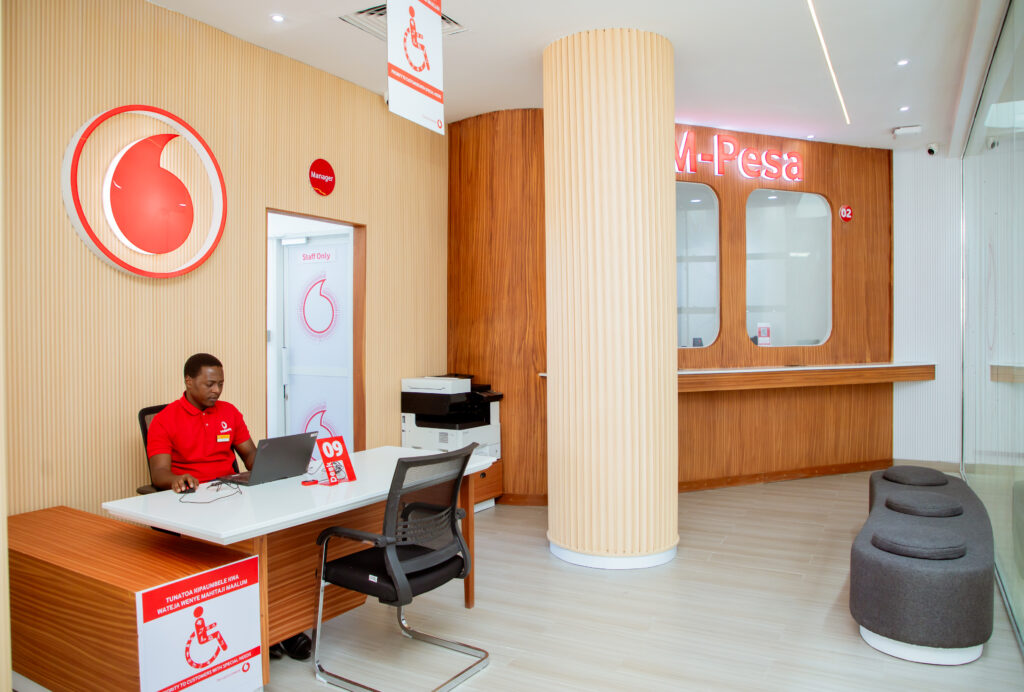
Walk into any Vodacom store or office. Could a colleague who uses a wheelchair reach the consultant desk? Could a customer with vision impairment use the self-service kiosk unaided? Could someone with a hearing impairment follow a large team event? If the answer is “probably not”, that’s the gap our physical space standards are designed to close. Take our recently revamped flagship store in Dodoma, Tanzania, for example: it shows what’s possible when you design a retail space around every customer who might walk through the door.
| ✓ DO THIS | ✗ AVOID THIS |
|---|---|
| Provide ramps, automated doors and accessible parking bays close to entrances | Assume stairs alone are sufficient for all employees and customers |
| Keep aisles and pathways clear, with no display stands, chairs or cables in walkways | Block accessible routes with marketing materials, chairs or equipment |
| Ensure at least one low consultant desk is always available and accessible | Direct wheelchair users or customers of short stature to a high counter |
| Allow customers to test device accessibility features (screen readers, magnification, voice control) before purchasing | Assume customers know how assistive technology works without a demonstration |
| Speak directly to the person with a disability, not to a companion or carer | Talk over someone or address only the person accompanying them |
| Ask “How can I assist you?”, and wait for the answer | Assume what kind of assistance someone needs |
| Allow guide and service dogs into all stores and venues, and train security staff accordingly | Refuse entry to assistance animals or challenge the person about their working dog’s credentials |
| Provide sign language interpreters and live captions at internal events | Hold large-format events without any hearing accessibility provision |
| Offer seating and rest spots in stores – particularly for elderly visitors and those with fatigue-related conditions | Expect all customers to stand throughout a service interaction |
| Include accessibility requirements in building and lease specifications from the outset | Retrofit accessibility as an afterthought after a lease is signed |

The digital dimension
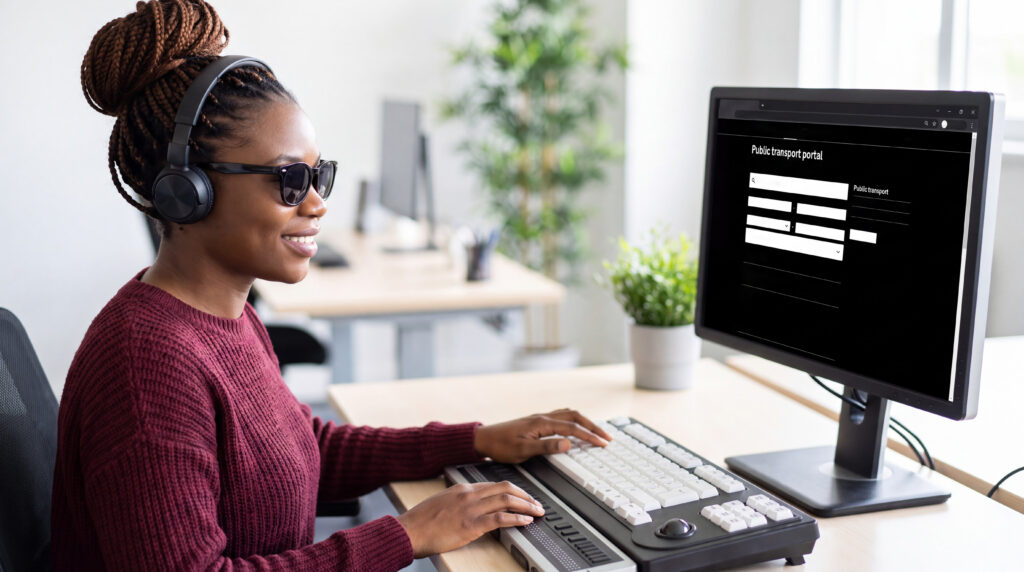
Inclusion doesn’t stop at the front door. For millions of customers and many colleagues, our main point of contact is digital. A website that a screen reader can’t navigate, a video without subtitles, a document formatted only for sighted readers: each is a closed door. Our standards align with globally recognised guidelines.
| ✓ DO THIS | ✗ AVOID THIS |
|---|---|
| Add captions and transcripts for deaf persons and audio descriptions for visually impaired persons to all video content | Publish video content with audio only and no text alternative |
| Use sufficient colour contrast and readable font sizes across all digital platforms | Rely on colour alone to convey meaning; those with colour blindness will miss it |
| Add meaningful alt text to every image: describe what the image shows and why it matters for visually impaired persons using screen reader software | Leave alt text blank or write “image” as the description |
| Structure documents with logical headings so screen readers can navigate them correctly | Use bold or large text to simulate headings without applying heading styles |
| Enable Microsoft Teams Live Captions in meetings and pin sign language interpreters’ video feeds | Run hybrid or remote meetings without any captioning or interpreter provision |
| Use the Check Accessibility feature (under the Review tab) in Word and PowerPoint before distributing documents | Distribute internal documents or presentations without checking accessibility |
| Provide content in multiple formats: easy-read, large print, audio and captioned video | Assume one standard document format works for all readers |
| Ensure website product pages allow users to filter by disability category to find relevant devices and plans | List products without any guidance on accessibility features or suitability |
| Make self-service kiosks keyboard-navigable and position them at a height accessible to wheelchair users | Install kiosks at heights or with touch-only interfaces that exclude some users |
How this connects to our purpose
Vodacom’s purpose rests on three pillars: empowering people, protecting the planet and maintaining trust. Accessibility intersects with all three. We can’t empower people who can’t access and use our services, or keep the trust of customers who feel invisible in our stores.
The standards show up in a handover email, a Teams meeting set up for a colleague who is hard of hearing, empathetic store staff, and a store ramp kept clear every day. They’re in place. Now it’s up to each of us to create a welcoming environment where colleagues and consumers with disabilities feel they belong.