Fintech in Tanzania: a quick tap with big potential
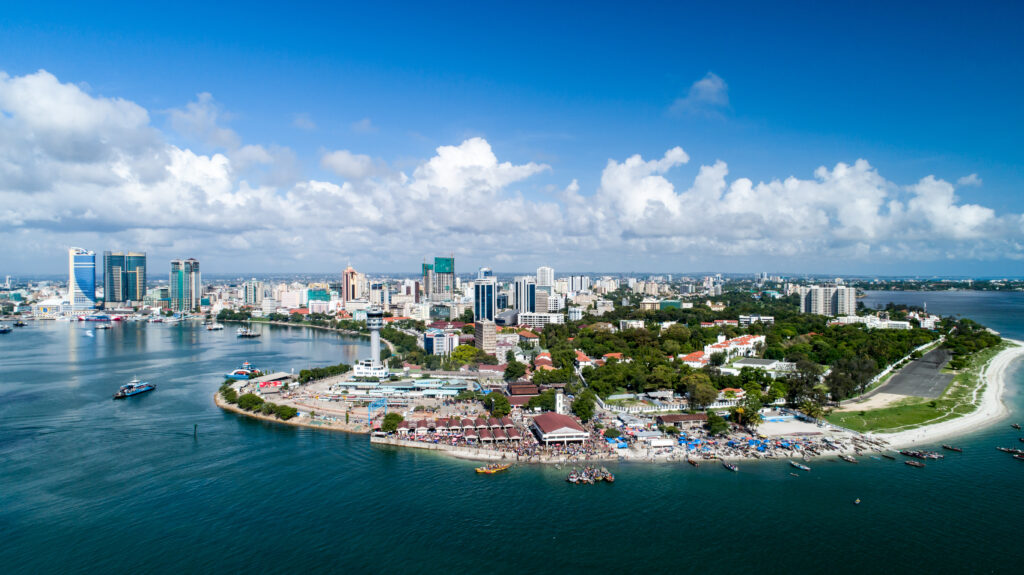
At a checkout counter in Dar es Salaam, a phone now does what once required a card, cash or a queue. M-PESA Tap-to-Pay turns a trusted mobile wallet into a contactless passport for everyday commerce.
A small gesture with a big meaning
The action is almost too simple to notice: unlock an Android phone, open the M-PESA Super App and tap at a Visa-enabled point-of-sale terminal. No plastic card. No cash counted out at the till. No new device required by the merchant. The payment moves from a mobile-money wallet through a tokenised Visa virtual card, using NFC technology many people already carry in their pockets.
That simplicity is exactly why M-PESA Tap-to-Pay in Tanzania is special. Launched in March 2026, the service has been described by its partners as Africa’s first mobile-money tap-to-pay solution: a way for a wallet, rather than a bank card, to make contactless payments on global card rails. For more than 22 million Vodacom Tanzania M-PESA customers, it expands what a familiar wallet can do.
It also says something bigger about where African fintech is heading. Mobile money has already changed how people send value, buy airtime, pay bills and manage daily life. Tap-to-Pay takes that trust into the physical checkout environment, where card terminals are already part of formal retail, travel, hospitality and services.
How M-PESA Tap-to-Pay works
The customer uses the M-PESA Super App on an NFC-enabled Android phone
A tokenised Visa virtual card is linked to the M-PESA wallet
The customer taps the phone at a Visa-enabled contactless point-of-sale terminal
The merchant can use existing Visa contactless infrastructure; no special new hardware is required
From local wallet to global acceptance
The cleverness sits behind the tap. The solution, developed by Vodacom Tanzania and M-PESA Africa with Visa and Paymentology, creates a tokenised Visa virtual card linked to the customer’s M-PESA wallet. Tokenisation replaces sensitive payment details with a secure digital token, helping protect the customer while enabling the transaction to be accepted on Visa’s contactless infrastructure.
For customers, the benefit is immediate: M-PESA becomes usable at Visa-enabled point-of-sale terminals in Tanzania and, where supported, internationally. For merchants, the barrier is low because the service works on existing Visa contactless terminals. For people without a physical bank card, it opens a payment experience that has often sat outside their reach.
The platform beneath the promise
A tap can only feel effortless if the platform behind it is strong. That is why Vodacom Tanzania’s $28 million investment in M-PESA, announced on 2 April 2026, matters. The migration from the legacy G2 system to a next-generation fintech platform was designed to strengthen scale, resilience and innovation.
Philip Besiimire, CEO of Vodacom Tanzania, describes the investment as future-proofing one of Tanzania’s most important financial platforms. He says the goal is to keep M-PESA “secure, reliable, and ready to support innovation at scale”, adding that customers deserve a platform that evolves with their needs – “faster, stronger, and more resilient”.
The operational improvements are tangible. Routine maintenance and downtime have been reduced from hours to minutes. A 30-day HyperCare period provided intensified technical and customer support after launch. These details may not appear at the checkout counter, but they are what make the checkout counter work.
Numbers that matter
M-PESA Tap-to-Pay launched in Tanzania on 17 March 2026
More than 22 million Vodacom Tanzania M-PESA customers are in scope
Vodacom Tanzania has invested $28 million to modernise the M-PESA platform and support future innovation
Vision 2030 in the palm of a hand
M-PESA Tap-to-Pay connects directly to our Vision 2030 ambition to deepen consumer and enterprise financial and digital services inclusion. The strategy includes scaling beyond core financial services into payments, lending, insurance, investment, trade and international money transfer, powered by super-apps and mini-apps. It also sets a target of 120 million financial services customers by FY2030.
Those targets become more meaningful when seen through a customer moment. A wallet that can tap at a terminal can help a small business serve customers faster. It can help a traveller pay without carrying cash. It can help a young, digital-first customer use the phone as both wallet and payment instrument. It can help merchants accept more forms of payment without adding complexity.
For employees across the Group, the Tanzania launch is a reminder of what “Create the future” looks like in the Spirit of Vodacom.
What comes next
The next chapter will be about adoption: helping customers understand how to use M-PESA Tap-to-Pay, supporting merchants, strengthening reliability and learning quickly from the market. It will also be about scale. M-PESA serves around 68 million customers across six countries, and the lessons from Tanzania can inform how contactless mobile-money payments evolve across the continent.
Tap-to-Pay stands out because it makes a global payment experience feel familiar and local. It brings contactless payments into a wallet that millions already use, showing how Vodacom can combine partners, platforms and purpose to deliver financial services that are simpler, safer and more inclusive.
Bongi Mbuli, Group Executive Head: Internal Communications, Vodacom Group Sian Singh, Senior Specialist: Internal Communications, Vodacom Group Content contribution: Our thanks to the internal communications teams and representatives from the Vodacom Group of companies One Spirit is edited, designed and published on behalf of Vodacom Group by Media24 (Pty) Ltd
This communication is an internal magazine for employees of the Vodacom Group of companies that is intended solely for use by Vodacom Group employees and authorised representatives. Copyright 2026, Vodacom. All rights reserved. While all precautions have been taken to ensure accuracy of information, neither the editor, publisher nor Media24 can be held liable for any inaccuracies, injury or damage that might occur.
All content, information, artwork and opinions are Classified as C1, as per Cyber Security Restrictions.