Towards a brighter future: our journey to net zero
Vodacom is committed to a better future by reducing our environmental impact. Through our groundbreaking net zero programme, we are working to eliminate our greenhouse gas emissions to net zero by 2035.
Our approach to sustainability is world-class, and despite many challenges related to cross-country operations, we have made impressive strides to reduce our carbon footprint at scale.
Climate change is universally acknowledged as one of the most critical challenges of our time, with particularly severe impacts in Africa. As a purpose-led organisation, we aim to protect the planet by switching to renewable energy sources across our business and investing in energy-efficient programmes to reduce our impact on the environment and enable a just climate transition.
A multipronged approach
Vodacom’s net zero programme is an expression of our ambition to fully decarbonise our operations by 2035. With infrastructure spanning six countries and more than 40 000 sites across our footprint, including radio access sites, technology centres, offices and retail stores, our goal is to lead the energy transition in our markets.
In this multiyear programme, we focus on the following:
Energy efficiency, enhanced control and energy intelligence
On-site renewable energy generation
Off-site renewable energy generation, e.g. power purchase agreements
Carbon mitigation instruments such as renewable energy certificates, carbon offsets and carbon credits.
Our strategy is focused on data-driven energy management to lower our energy use and associated carbon footprint using the latest, most advanced and innovative technologies.
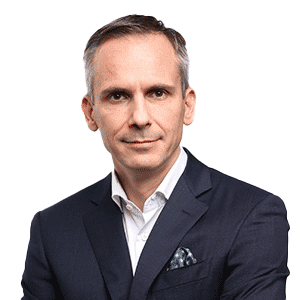
Dejan Kastelic
Group Chief Technology Officer
“Addressing Africa’s energy challenges and working towards a renewable energy-powered future is a key requirement in improving connectivity and contributing to global climate change mitigation efforts.”
Trailblazing energy innovations
In South Africa, we’ve pioneered Virtual Wheeling with Eskom, the sole electricity provider in the country, allowing us to access renewable energy generated by Independent Power Producers via the Eskom grid. This innovation helps us address our decarbonisation challenges with on-site renewable technologies at scale without any direct capital investments by Vodacom.
Notably, South Africa’s Ministry of Electricity, Eskom and the business community have hailed our Virtual Wheeling initiative as “revolutionary” and “pivotal”. We’re working to extend this groundbreaking solution to more of our operating markets where the environment is conducive.
Meanwhile, Vodafone Egypt is leading in North Africa, having invested significantly in renewable energy through an agreement with the Ministry of Electricity. Over 80% of our sites are now covered by this renewable power purchase agreement. Egypt was also the first in Vodacom Group to trial immersion cooling technologies for their IT equipment.
In our access network, we trialled a cutting-edge, self-replenishing hydrogen fuel cell. This self-sustaining solution does not require a supply chain of fuel, and is safe and green if paired with on-site renewables. We also rolled out low-cost energy meters to improve our visibility of our energy consumption and to identify opportunities for improvement.
On-site renewable generation and acceleration of grid connections
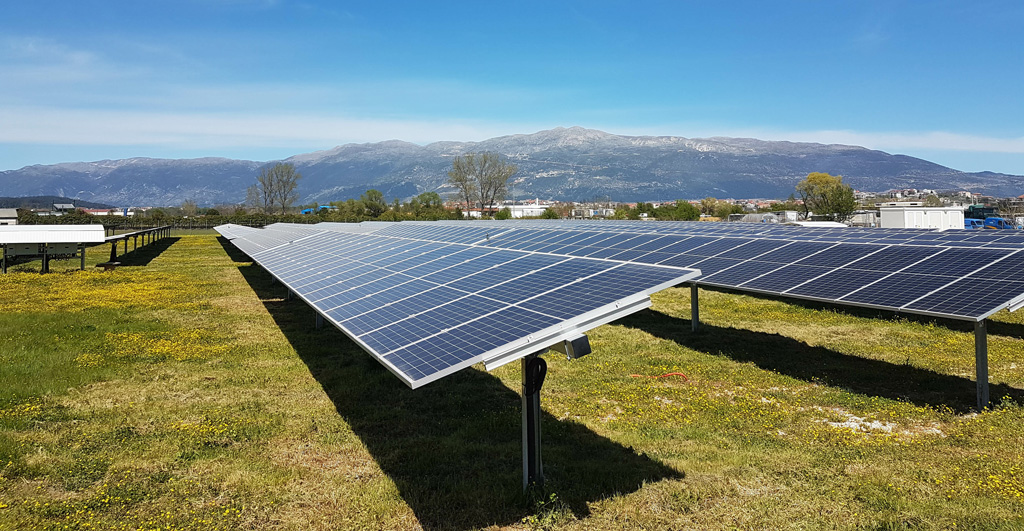
Vodacom is also focusing on on-site renewable energy, such as solar PV, wind turbines, micro-turbines using biofuels (and in the future hydrogen), and the self-replenishing hydrogen generation for fuel cells. Significant solar deployments in Lesotho, Tanzania, Kenya (Safaricom) and the DRC are powering our off-grid sites. Egypt has introduced the first solar/wind hybrid telecom solution in the Group, reducing reliance on grid power or diesel by over 65%, while South Africa has successfully reduced grid electricity with wind turbine technology.
To reduce our carbon footprint in our other markets, and where on-site renewables are not feasible, we aim to connect our remote off-grid sites to existing power grids that run on renewable energy sources. This will decrease our reliance on diesel generators, which have a higher emissions factor than grid-sourced electricity in most of our operating countries, even if it is partially fossil fuel-based.
Energy conservation and intelligence
To reduce our carbon footprint, we depend on several technological and operational advances. We converted several of our access sites from walk-in containers to outdoor enclosures hosting the radio and network equipment, while also implementing free cooling and higher-efficiency rectifiers.
In our technology centres and offices, we have started with the basics, performing regular maintenance and housekeeping to ensure efficient circulation of air conditioning and upgrading our lighting to intelligent LED technology with proximity sensors. When our technology centres are due for capital replacement, we improve the layout and containerise the equipment in conjunction with dynamic thermal management.
Our proactive energy management includes deploying smart meters at each site to monitor and manage consumption effectively, while centralised energy management collects data, allowing informed decision-making. Incorporating AI assists in processing manual invoices and improves energy efficiency. We are investigating using Gen AI solutions to assist with data processing. These initiatives are instrumental in our efforts to reduce our carbon footprint and transition to a more sustainable energy model.
State-of-the-art AI solutions
One significant cost driver on radio access sites is to deploy the latest network technologies, such as 4G/5G. Since our networks still serve customers on 2G/3G networks, our energy consumption must be managed continuously to ensure that we use the minimum energy to serve our customers.
We are employing AI solutions to manage our radio networks, bringing us as close as possible to zero watts per bit of data traversing our networks. Vodafone Egypt’s patented, state-of-the-art AI model extends the battery uptime at remote sites by continuously monitoring and managing the network capabilities.
Our future expansion of AI solutions includes predictive and prescriptive energy maintenance, energy benchmarking, outlier detection, bill verification, tariff optimisation, and expanding our monitoring strategy to enhance our decision-making.
Recognition for setting a new standard in sustainability
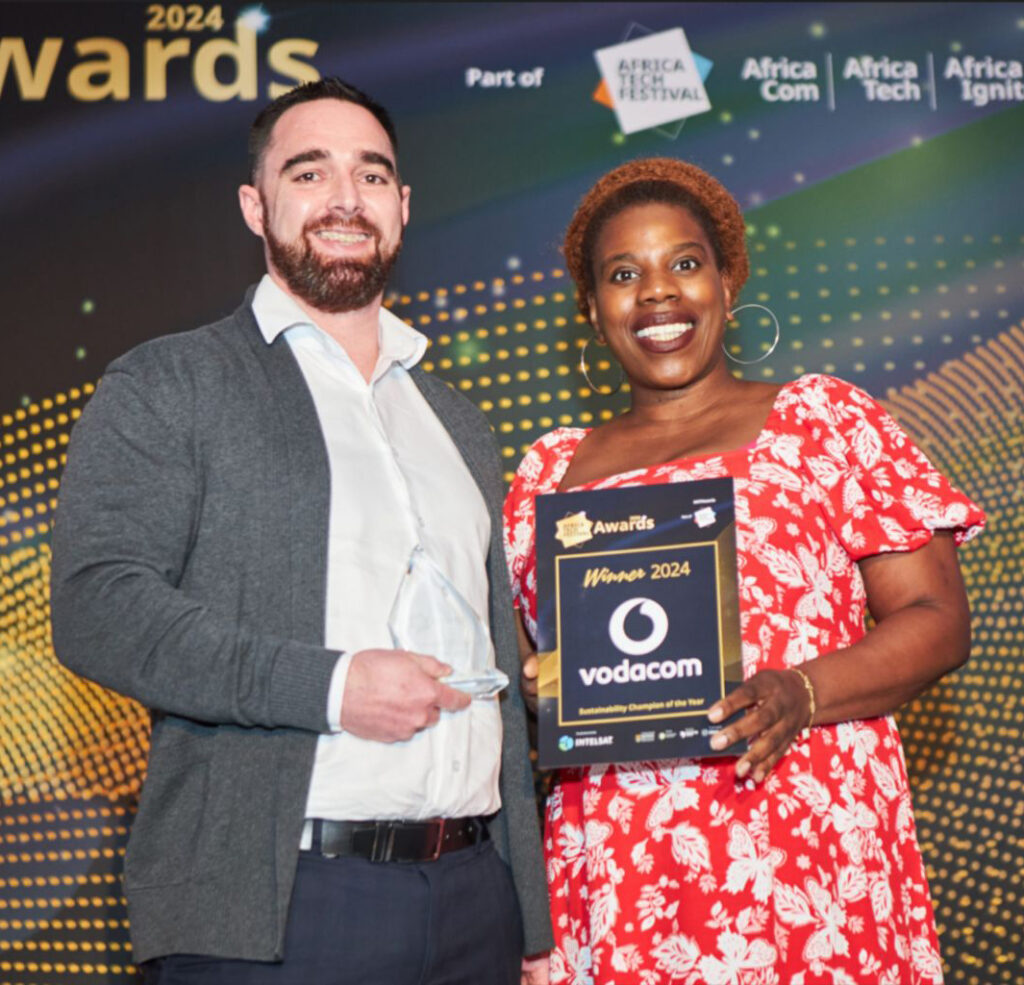
In October, the Net Zero project team received the Sustainability Champion of the Year Award at the Africa Tech Festival Awards.
This incredible achievement was a collective effort championed by Vodacom Group Energy Management working with Group ESG & Sustainable Business, with support from Vodafone. The award recognises our leadership in developing and integrating sustainable energy solutions as part of our commitment to achieving net zero targets.
Congratulations to the team for winning this award and continuing to drive our decarbonisation ambition for 2035.
Bongi Mbuli, Group Executive Head: Internal Communications, Vodacom Group Sian Singh, Senior Specialist: Internal Communications, Vodacom Group Content contribution: Our thanks to the internal communications teams and representatives from the Vodacom Group of companies One Spirit is edited, designed and published on behalf of Vodacom Group by Media24 (Pty) Ltd
CREDITS
Cover image: Getty Images & Google Gemini Photographs, videos and illustrations: Supplied by Vodacom Group, Getty Images, Google Gemini, Gallo Images & Midjourney
DISCLAIMER
This communication is an internal magazine for employees of the Vodacom Group of companies that is intended solely for use by Vodacom Group employees and authorised representatives. Copyright 2025, Vodacom. All rights reserved. While all precautions have been taken to ensure accuracy of information, neither the editor, publisher nor Media24 can be held liable for any inaccuracies, injury or damage that might occur.
All content, information, artwork and opinions are Classified as C1, as per Cyber Security Restrictions.