The invisible economy: from cash-only to connected
In an economy where cash is king, millions of people remain invisible to the financial system. But the informal traders of Africa didn’t wait to be included – they built something better. And Vodacom is connecting it.
The giving equation
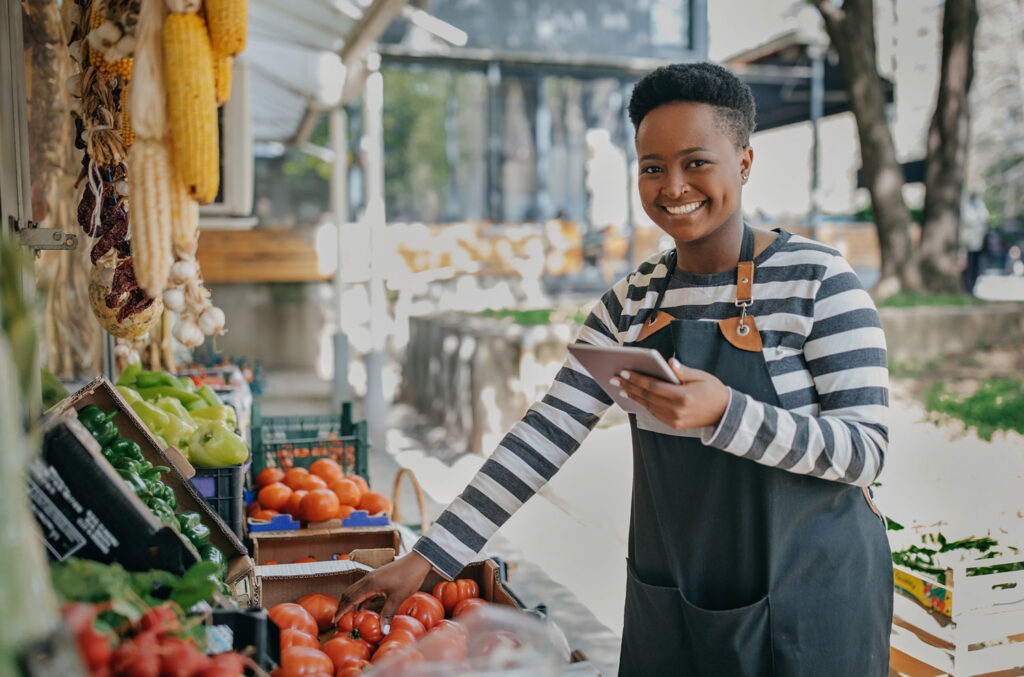
Every morning in Dar es Salaam, a fruit vendor arranges her mangoes on a wooden crate. She has no storefront. No bank account. No paper trail. Just her stock, her instincts, and the cash she’ll turn over three times before sunset.
She isn’t an outlier. She is the economy.
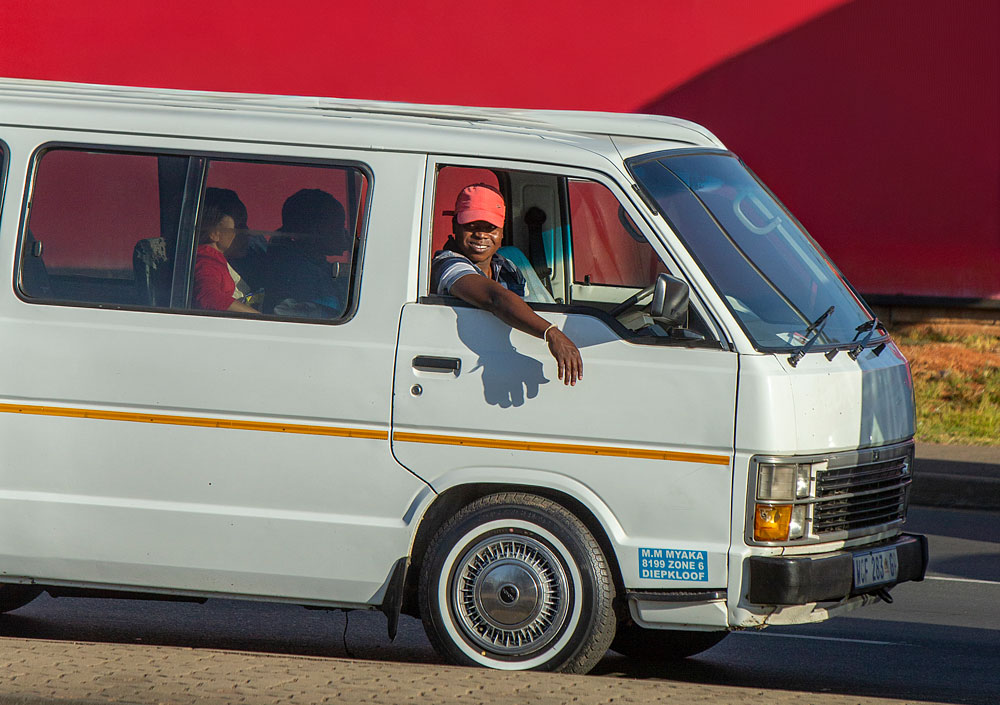
Across sub-Saharan Africa, the informal sector accounts for roughly 66% of all employment, according to the International Labour Organization. These are the spaza shop owners in Soweto, the motorcycle-taxi drivers in Nairobi, the seamstresses in Maputo. They form the continent’s economic backbone, moving billions in cash every year. Yet for decades, they’ve been invisible to the formal systems that could help them grow: banking, credit, digital commerce.
What makes this economy remarkable is not its size. It’s its architecture.
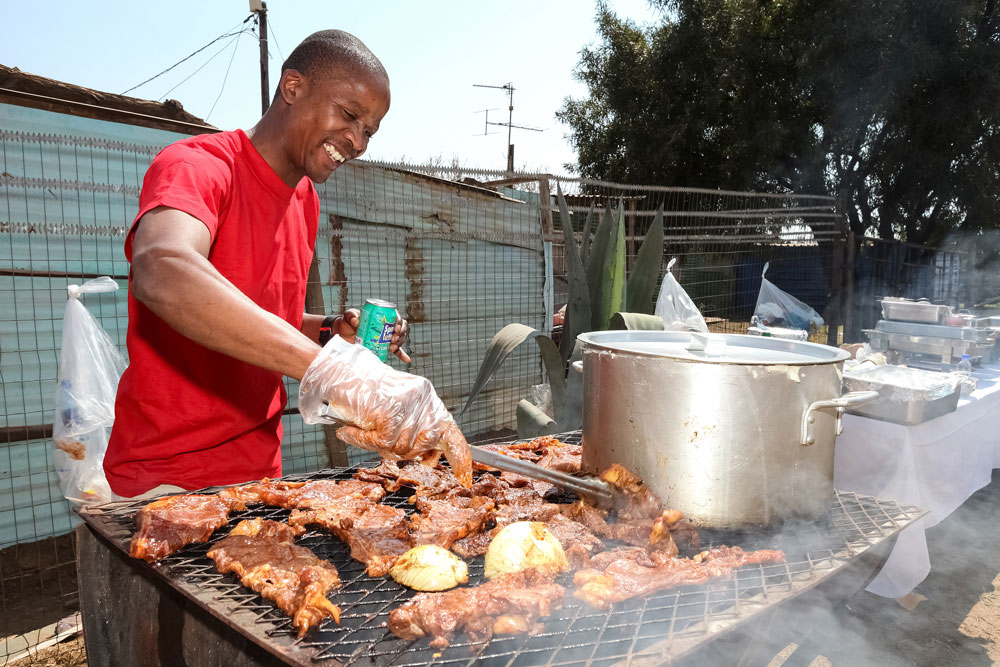
Here, trust does the work that formal contracts and credits scores do in other parts of the world. A trader in Maseru extends credit to a customer she’s known for years. A group of women in Cape Town pool their savings weekly, each one taking a turn with the pot. A shop owner in Addis Ababa restocks on a handshake. The system holds not because of regulation, but because of reputation – and in communities where everyone knows everyone, reputation is currency.
This is a financial system built on social capital, and it works.
The trust economy
Africa’s informal economy runs on a financial technology that predates the internet by centuries: reputation. In communities where formal credit checks don’t exist, a trader’s word – and their track record within their social network – functions as their credit score. Research from UC Berkeley’s Haas School of Business shows that models trained on social capital and community reputation data can predict creditworthiness among savings group members with high accuracy. Africa didn’t skip financial infrastructure; in many ways, it built a more human version of it.
The 120 million customer opportunity
When we talk about our Vision 2030 targets – specifically the goal to reach 120 million financial services customers and push smartphone penetration above 75% – we’re talking about bringing this invisible economy into the light.
“Financial inclusion is not just a buzzword; it is a commercial imperative,” says Shameel Joosub, Group CEO. By designing products that work for the trader, the farmer, and the gig worker, we’re unlocking a market that traditional banks have historically walked past.
The proof is already in our markets.
Farmers without fences
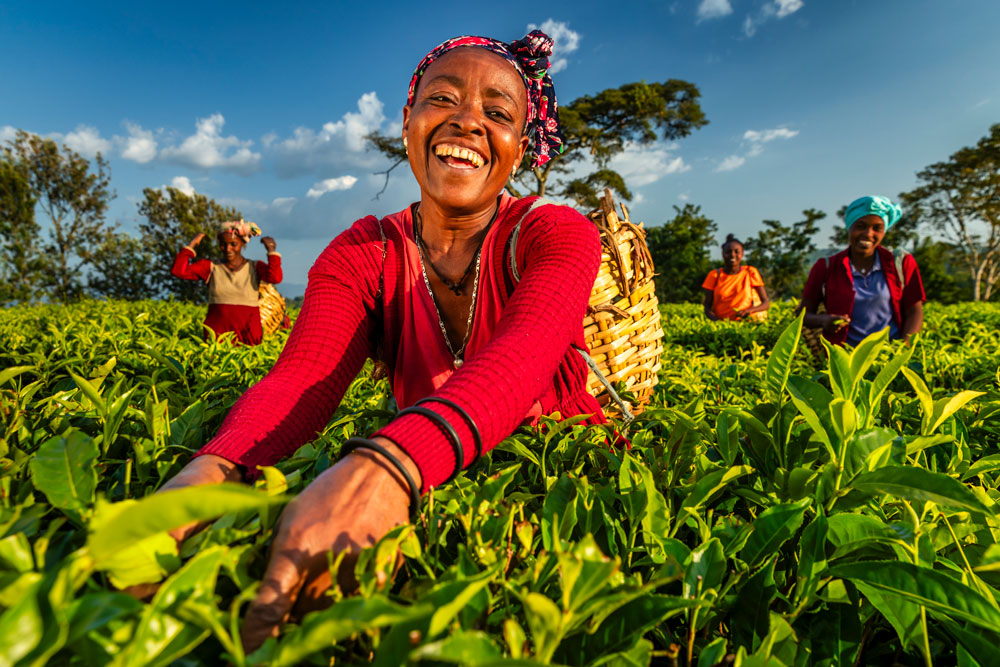
In Tanzania, M-Kulima has become a digital lifeline for the agricultural sector. The platform connects 3.2 million smallholder farmers to market prices, weather forecasts and buyers – all via simple mobile technology.
By cutting out middlemen and giving farmers a digital record of their sales, M-Kulima turns a “survival” business into a bankable one.
Digitising the stokvel
In South Africa, stokvels are one of the most quietly extraordinary financial institutions on Earth. The National Stokvel Association of South Africa (NASASA) estimates that over 11 million South Africans belong to a stokvel – roughly 800 000 active groups – mobilising approximately R50 billion annually.
A stokvel is a rotating savings club built entirely on community trust. Members – often neighbours, colleagues, or church friends – contribute a fixed amount each cycle. Each member takes a turn receiving the full pot. No interest is charged and no formal agreement signed. What enforces it is social obligation: the same Ubuntu philosophy – “I am because we are” – that has underpinned community life across southern Africa for generations.
For generations, this money lived in cash boxes and under mattresses. Today, it’s moving onto the VodaPay super-app.
By digitising stokvel contributions, members gain transparency, security, and a digital footprint. That footprint matters. For a spaza shop owner who relies on a rotating credit club to buy stock, a digital record of consistent saving is the difference between being “unbanked” and being “creditworthy.” It’s a credit score, rebuilt from the ground up – community first.
The hustle is the product
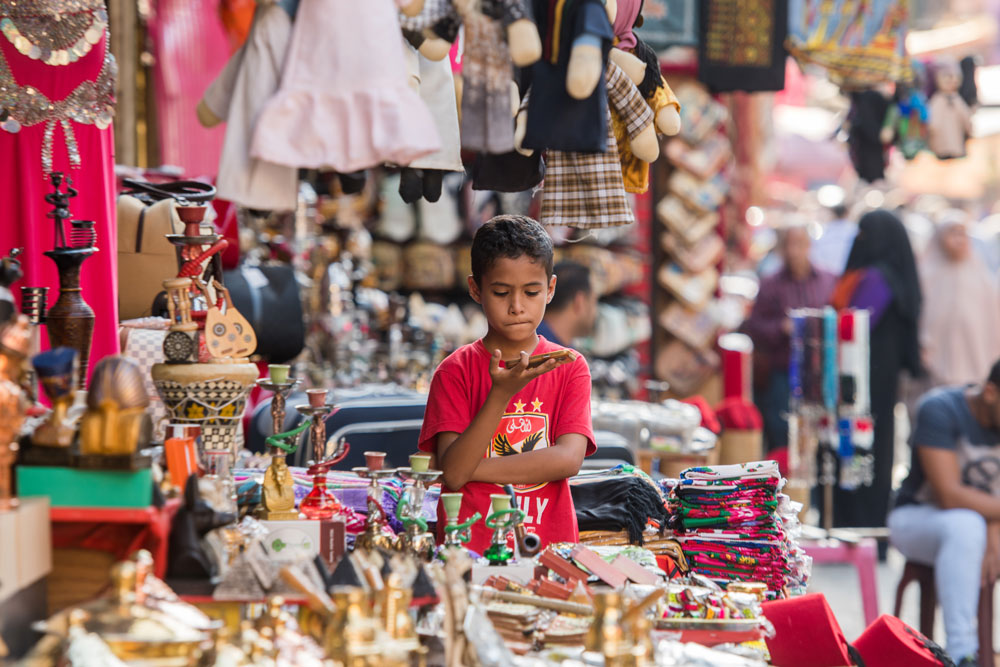
A single informal vendor in sub-Saharan Africa might sell airtime, snacks, phone charging, and second-hand clothes – all from the same wooden stall. It’s deliberate income diversification: when one revenue stream dries up, the others keep cash flowing. Researchers have described this as “hyper-micro entrepreneurship” – a form of agile business management that most MBA programmes have only recently started teaching. Africa’s informal traders have been practising it for decades.
Connecting the last mile
None of these digital services work without a signal. You can’t run a digital wallet in a valley with no coverage.
This is where our strengthened satellite strategy comes in. Through partnerships with low Earth orbit (LEO) satellite providers, including Starlink and Amazon Leo, Vodacom is extending high-speed 4G and 5G connectivity to remote areas that were previously too costly to reach with fibre. Whether it’s a remote clinic in the DRC or a rural school in the Eastern Cape, satellite backhaul ensures “remote” no longer means “disconnected”.
From invisible to investable
The informal economy isn’t informal because people prefer it that way. It’s informal because the formal economy never built infrastructure that worked for them.
High account fees, minimum balances and credit checks don’t work for a trader who earns R200 today and nothing tomorrow. What does work is a device you can pay off with your airtime, a market platform accessible by SMS, and savings club on an app.
By building these tools, Vodacom is validating their economic activity. We’re taking an economy that already works – that runs on trust, community and daily hustle – and giving it the infrastructure it has always deserved.
The fruit vendor in Dar es Salaam is no longer just selling mangoes. She’s a connected merchant, a saver, a participant in the global economy. Not because we changed how she does business – but because we finally built something that fits the way she already does it.
Bongi Mbuli, Group Executive Head: Internal Communications, Vodacom Group Sian Singh, Senior Specialist: Internal Communications, Vodacom Group Content contribution: Our thanks to the internal communications teams and representatives from the Vodacom Group of companies One Spirit is edited, designed and published on behalf of Vodacom Group by Media24 (Pty) Ltd
CREDITS
Cover image: Getty Images & Google Gemini Photographs, videos and illustrations: Supplied by Vodacom Group, Adobe Stock, Adobe Firefly, Getty Images & Google Gemini
DISCLAIMER
This communication is an internal magazine for employees of the Vodacom Group of companies that is intended solely for use by Vodacom Group employees and authorised representatives. Copyright 2026, Vodacom. All rights reserved. While all precautions have been taken to ensure accuracy of information, neither the editor, publisher nor Media24 can be held liable for any inaccuracies, injury or damage that might occur.
All content, information, artwork and opinions are Classified as C1, as per Cyber Security Restrictions.