How we’re making a positive impact in communities across Africa
From Cape to Cairo, our Foundations transform lives in society through digital education, digital health and economic empowerment of youth, women and people with disabilities. We believe that when we grow and succeed, the communities that support us should thrive alongside us. Here are some of our key initiatives from this year.
Through our Foundations, we strive to bring social change to our communities by working together and sharing ideas about how to address social issues. We’re committed to driving digital and social transformation – ensuring that as Vodacom grows, so do the people and places we serve.
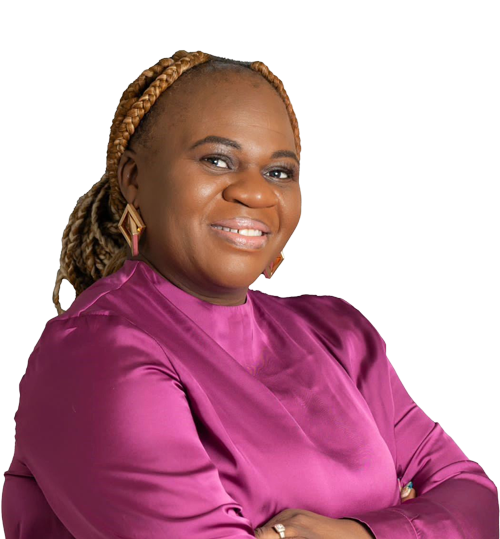
Mashudu Ndou
Group Executive for Foundations
“This year, the Vodacom Group Foundation has demonstrated the power of purpose in action. What inspires me most is the spirit of our people – thousands of employees who volunteered their time and skills to uplift others.”
Breaking barriers across the continent
Our purpose pillar of empowering communities is something we live and drive to work for. We are indeed connecting for a better future, leaving no one behind.
Our impact isn’t just numbers; it is lives transformed, barriers broken and futures reimagined.
South Africa: Building an education ecosystem
The education ecosystem models a comprehensive approach to supporting schools and Early Childhood Development (ECD) centres. Support from the Vodacom Foundation includes infrastructure upgrades, fully refurbished computer labs with devices, security upgrades and, where necessary, decommissioning of pit latrines.
There are currently 30 Vodacom-supported Schools of Excellence and 32 Vodacom-supported Early Childhood Development centres countrywide. We also deploy ICT coordinators to assist both educators and learners with accessing and using technology.
Since 2021, Vodacom has been placing psychosocial support professionals in all Schools of Excellence to assist with issues of gender-based violence, bullying and other psychosocial challenges. There are currently 41 psychosocial support professionals serving more than 40 000 learners, as they extend their services to neighbouring schools in the district.
For learners dealing with trauma, these professionals represent hope, ensuring that no child’s potential is lost because they lacked support.
Tanzania: Protecting the environment and building climate resilience
On the foothills of Mount Kilimanjaro, the Kahe II Forest Restoration Project is bringing degraded landscapes back to life along the Pangani Basin – the main water source for over 6.7 million people across 13 communities in three regions of northern Tanzania.
For the 206 000 smallholder farmers who depend on this basin for their livelihoods, the restoration helps to ensure that their crops have water, that soil erosion doesn’t claim their fields, and that their children will inherit land that can still sustain a family.
Through the Vodacom Tanzania Foundation, we’re planting 1.5 million indigenous and endangered trees to restore water flow and prevent soil erosion. To date, 49 000 trees have been planted with an 83.6% survival rate, thanks to our partnership with Tanzania Forest Services and the active participation of 1 200 farmers and 23 000 community members.
DRC: Rebuilding after disaster
When floods tore through Kalehe with devastating force, hundreds of people died or were injured. Families were separated. School buildings and health centres were washed away.
The Vodacom Foundation launched a campaign to help the community rebuild. In Phase 1, we supported emergency interventions: five minutes of free calls and a toll-free number in partnership with Red Cross so separated families could find each other. Zero-rated money transfers via M-PESA so resources could flow to those who needed them most. Decent shelters for victims, with mattresses and blankets to restore dignity and comfort.
Phase 2 focuses on economic recovery through agriculture – giving seedlings and tools to farmers so they can plant again, harvest again, and feed their families again. M-PESA acts as catalyst for this community recovery programme. For communities recovering from disaster, these services are lifelines.
Mozambique: Employees empowering communities
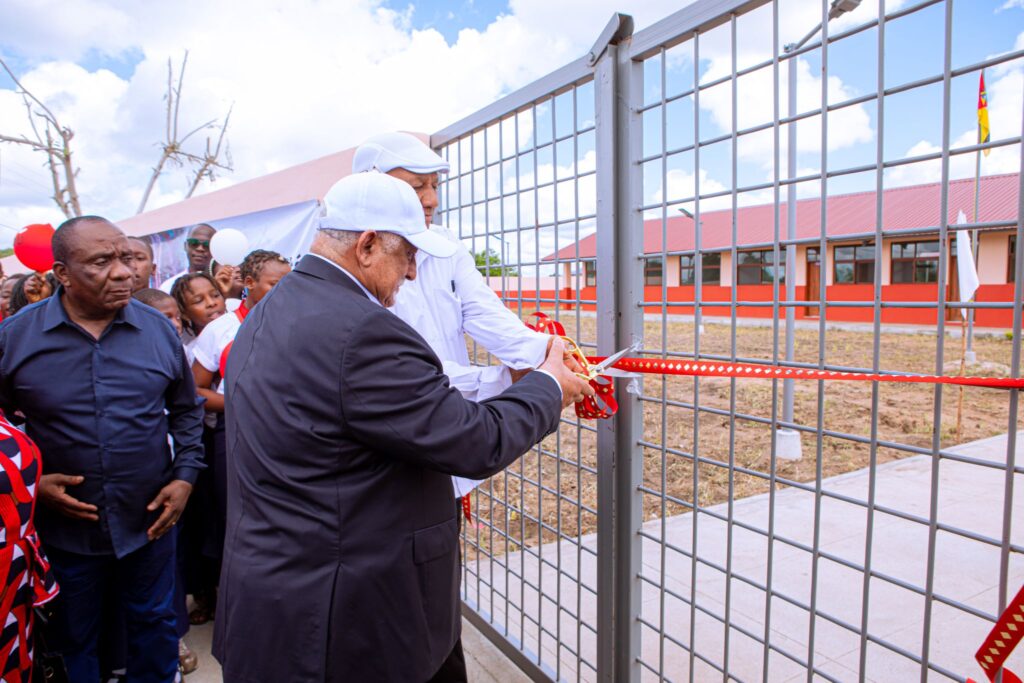
Across Mozambique, Vodacom employees turned compassion into action through our Employee Social Impact Initiative. In six provinces, teams identified what their communities needed most – then made it happen.
Our initiatives this year ranged from providing school supplies and shoes to primary students in Luabo, to erecting water wells in Inhambane that now provide clean drinking water. We painted the paediatric ward at Beira Central Hospital to brighten the space for sick children, equipped the Institute for the Visually Impaired with accessible computers and internet connectivity, supported women-led farming initiatives with seeds and tools, and delivered sports equipment to local basketball teams – creating impact across education, health, economic empowerment and youth development.
Lesotho: Opening doors to information
About 200 visually impaired people use the Insight Centre each month – a library specifically designed to enhance equal access to information. This translates to 2 300 to 2 400 people annually accessing brailling services, internet services and coordinated peer-learning sessions on leadership and opportunity applications.
The Vodacom Foundation is working to extend these services beyond Maseru to bring services to more people who would otherwise be unable to access information due to language barriers.
Egypt: Connected learning for a decent life
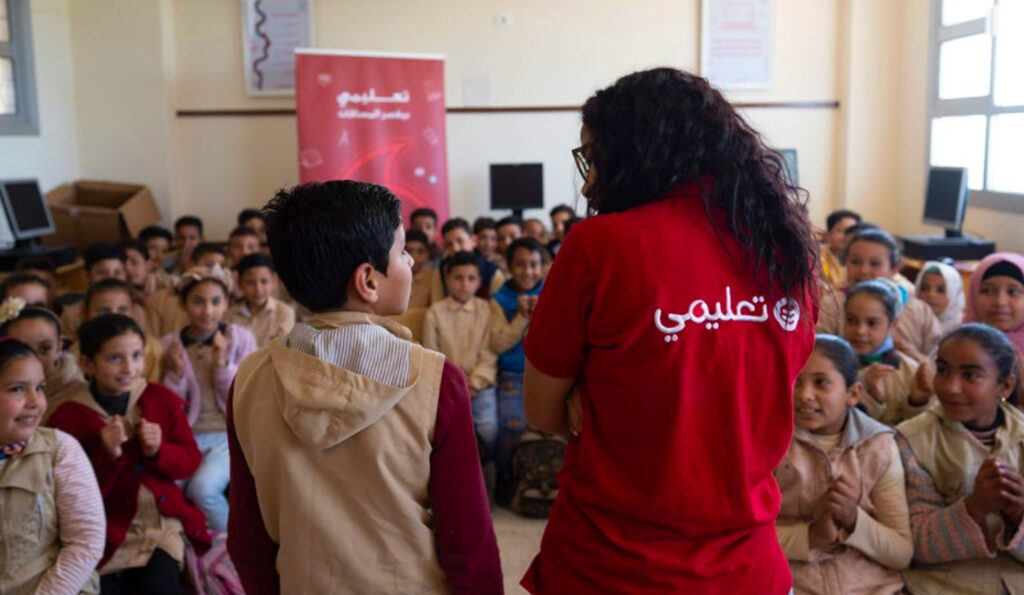
As a cornerstone of our commitment to digital education through the Hayah Karima – Decent Life Initiative, we empowered 2 199 students across six schools with vital digital literacy skills. The curriculum includes online privacy, cybersecurity and cyberbullying, equipping the next generation to navigate the digital world safely.
This latest effort expands our footprint to 296 schools across 10 governorates, benefiting more than 63 000 students to date. In a world where digital access increasingly determines opportunity, these skills ensure young Egyptians can participate safely and confidently in the digital economy.
Kenya: Economic empowerment through opportunity
Between July and September 2025, over 15 000 people found employment across construction projects supported by the Safaricom and M-PESA Foundations through three project management partners. Linear accounted for the largest share with 7 693 people engaged, followed by Plateau with 3 791 and Pleng with 3 758.
These numbers represent wages that feed families, skills that build careers, and opportunities that ripple through communities as employed workers spend their earnings locally, support their children’s education and invest in their futures.
Ethiopia: Financing farmers’ futures
For smallholder farmers, access to finance often determines whether they can plant the next season’s crops. Through M-PESA, we’re empowering farmers with low-risk digital loans, enabling access to critical agricultural inputs.
One thousand farmers are using the new M-PESA term loan product, accessing loans worth 4.8 million Ethiopian birr (about $31 000). The initiative has supported 224 smallholder farmers who have collectively harvested 40 tonnes of produce – notable improvements in productivity that translate to better nutrition for families and surplus to sell at market.
The programme strengthens rural economies through tech-enabled financial services, ensuring that farmers aren’t left behind in Ethiopia’s digital transformation.
Shared growth benefits us all
Across every market where we operate, our Foundations serve as the mechanism that ensures growth is shared. Together, we’re proving that when technology and humanity unite, we can create lasting change and a brighter, more inclusive future for all.
Looking ahead, we’ll expand our youth empowerment and health initiatives, deepen partnerships, and continue using technology to build a more inclusive and connected Africa.
When we expand our networks, when we grow our business, we ensure communities benefit alongside us. Because connecting for a better future means leaving no one behind.
Bongi Mbuli, Group Executive Head: Internal Communications, Vodacom Group Sian Singh, Senior Specialist: Internal Communications, Vodacom Group Content contribution: Our thanks to the internal communications teams and representatives from the Vodacom Group of companies One Spirit is edited, designed and published on behalf of Vodacom Group by Media24 (Pty) Ltd
CREDITS
Cover image: Getty Images & Google Gemini Photographs, videos and illustrations: Supplied by Vodacom Group, Getty Images, Google Gemini, Gallo Images & Midjourney
DISCLAIMER
This communication is an internal magazine for employees of the Vodacom Group of companies that is intended solely for use by Vodacom Group employees and authorised representatives. Copyright 2025, Vodacom. All rights reserved. While all precautions have been taken to ensure accuracy of information, neither the editor, publisher nor Media24 can be held liable for any inaccuracies, injury or damage that might occur.
All content, information, artwork and opinions are Classified as C1, as per Cyber Security Restrictions.