










The AI boom: transforming communication and connectivity
AI went from sci-fi to everyday use in just 18 months, reshaping entire industries along the way. Once confined to tech circles, Generative AI tools like Microsoft Copilot have democratised AI, making it accessible to millions and sparking a revolution across sectors worldwide.
Just two years ago artificial intelligence (AI) was something only software engineers and other tech types talked about. But in the past 18 months practically everyone has spoken about or heard about AI.
Although AI has been around for years, Gen AI has made it possible for non-tech people to use it. Gen AI, as the name suggests, can create entirely new pieces of content or code out of a simple instruction or question. Think of it as a digital artist or software engineer that can design, write or code simply because you prompted it to.
The models that power these Gen AI tools have also made it possible for various industries to change the way they operate. Healthcare, education, climate solutions – and, of course, the TechCo industries – are all rapidly transforming thanks to this technology.
We take a closer look at the AI revolution.

The effects of AI on consumers
Many consumers are now adopting AI usage in their daily lives. It is used in various ways, including:
- To communicate. Al can be used to improve written content, for example, by inputting bullet points and having the machine generate a professionally worded email. It can also help through translation, making communication between people using different languages much easier.
- To be productive. AI can help to manage schedules, transcribe meetings, summarise documents and create action plans.
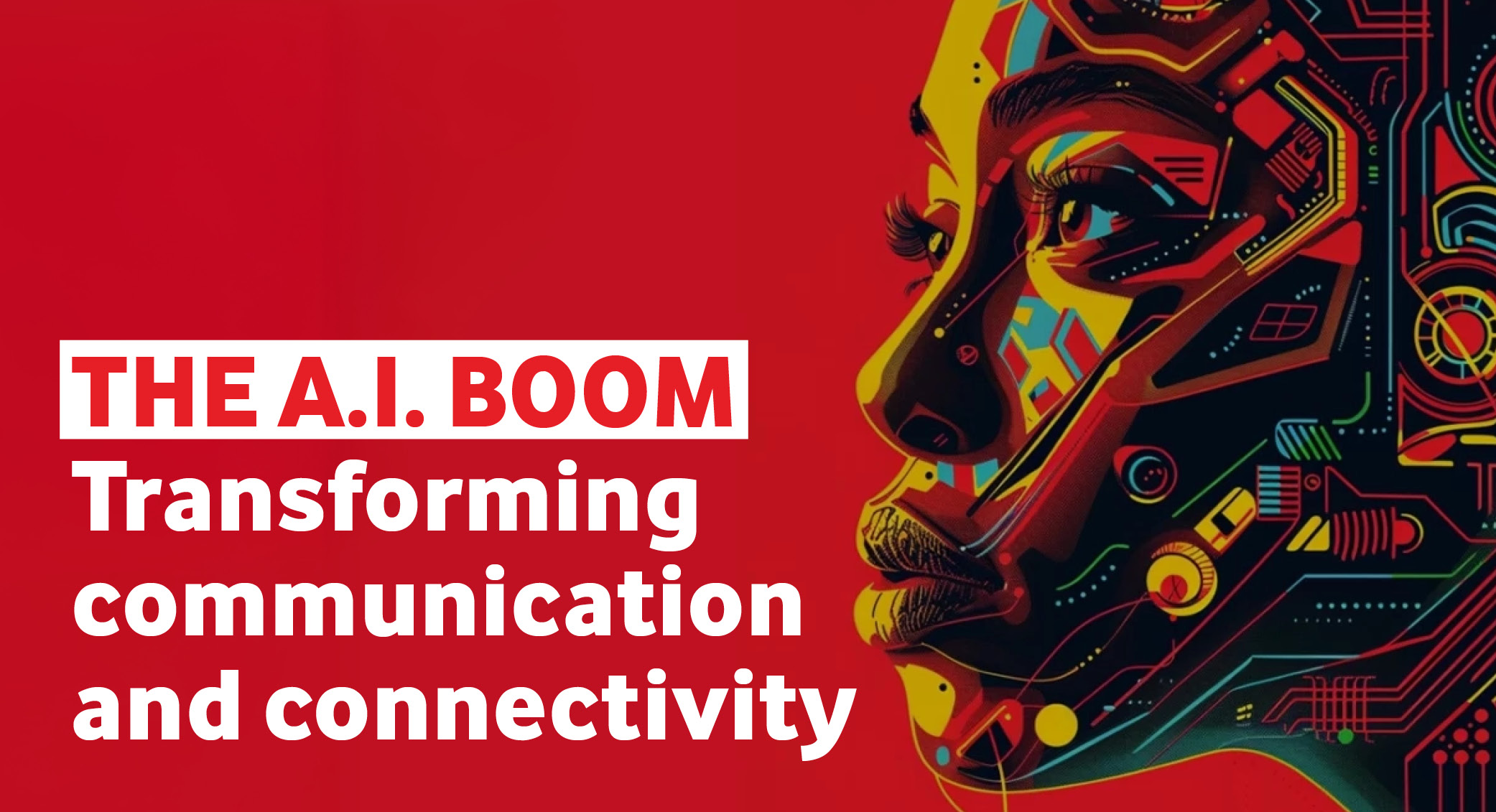
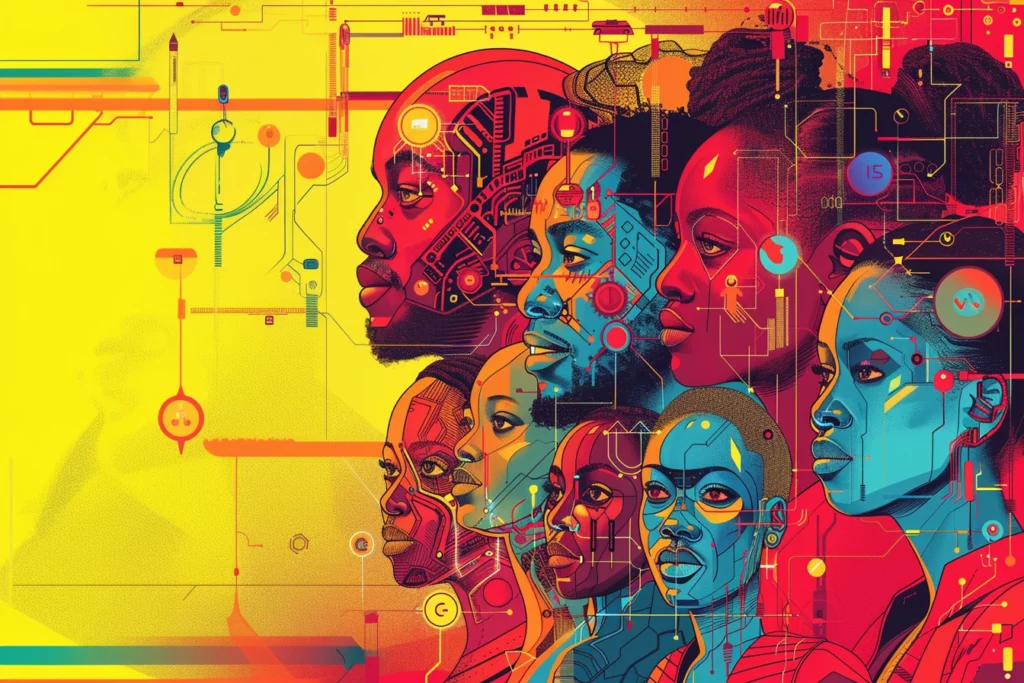
- To be creative. Many people have used it to generate images (such as in this article and on the cover of One Spirit) and write songs or poems. Some tools allow you to type in text that the AI transforms into audio (text-to-speech) or into video (text-to-video).
- To learn. You can ask an AI tool to explain a difficult topic by breaking it down into simpler terms.
- To brainstorm. AI assistants are increasingly being used as an additional member of the team. It can help with initial brainstorming ideas and help to flesh out concepts or solve problems. It is often used as a starting point, with the human members of the team delving deeper and creating a project or plan that is suitable for their audience.
Ready for the future
At Vodacom, we are embracing the AI revolution to improve our productivity and unlock our true potential, allowing us to focus on innovation and creativity more than ever before. #GrowWithUs by completing the Gen AI Empowering You Programme on the Vodacom Grow platform, for foundational learning. We’ve also partnered with MIT to bring you a more advanced programme through which you can earn an MIT badge. Visit Grow with Vodacom to get started.
The effects of AI on our industry
AI has been changing the way in which industries operate for some years now but the computing power of newer models is a game-changer. Gen AI models have made it possible to make sense of large volumes of data in a way that couldn’t be done before.
AI tools can play a role in helping to analyse network traffic in real time and allocate resources accordingly, and it can predict when a component or part of the network needs maintenance, says Alain Kallas, Executive Partner: Security and Risk Management at consultancy firm Gartner.
It can also be used in fraud detection, Kallas says. “AI systems can monitor millions of transactions in real time, flagging unusual patterns that might indicate fraudulent activity.”

AI can enhance operational efficiency by suggesting ways to manage cost, according to IT solutions business Veritis. And it can help to identify new revenue opportunities. “Network service providers (NSPs) can scrutinise usage patterns, extracting detailed insights into how customers utilise their networks and the underlying motivations behind their usage. Utilising these insights, NSPs can enhance their ability to meet customer expectations by offering more customised and specific services.”
AI may be used to enhance the retail experience too, says consulting firm McKinsey. “In addition to personalised ads and offers targeted to the customers in a store at any given time, analytics-driven integration of telcos’ online and physical retail functions could solve the problem of devices and accessories being out of stock or unavailable at a particular location.”
These tools also can help drive staffing efficiency, McKinsey notes. “Done well, these tools can dramatically reduce the problem of overstaffing and understaffing. By building predictive models that augment historical internal data with information such as demographic, income and search trend data, telcos can forecast staffing needs with up to 80% accuracy at the retail level.”
Vodafone’s AI partnership with Microsoft
In January this year, Vodafone signed a 10-year strategic partnership with Microsoft that Vodafone Group CEO Margherita Della Valle called “a bold commitment to the digital future of Europe and Africa”.
“This unique strategic partnership with Microsoft will accelerate the digital transformation of our business customers, particularly small and medium-sized companies, and step up the quality of customer experience for consumers.”
Microsoft CEO Satya Nadella believes AI will unlock new opportunities. “We are delighted that together with Vodafone we will apply the latest cloud and AI technology to enhance the customer experience of hundreds of millions of people and businesses across Africa and Europe, build new products and services, and accelerate the company’s transition to the cloud.”
FAST FACT: Over the next five years, AI solutions can positively affect 150 million people, which is about 3% of the global population, according to estimates by consultancy PwC.
FAST FACT: American computer scientist John McCarthy coined the term artificial intelligence at a conference in 1955. He is considered to be one of the founding fathers of AI and was influential in developing the field.
FAST FACT: Over the next 10 years, Vodafone will invest $1.5 billion in cloud and customer-focused AI services developed in conjunction with Microsoft.
The major players
OpenAI has dominated the Generative AI scene after launching ChatGPT in November 2022. This was the first tool that made AI accessible to ordinary people.
Less than a year after launching, it had 100 million weekly users and its success surprised even its makers. As OpenAI CEO Sam Altman says, “I’m surprised somewhat by the magnitude. But I was hoping and expecting people were going to really love it.”
Since then, other big tech players have entered the market too. Google launched Bard in March 2023 then changed the chatbot’s name to Gemini in February 2024. Google had already been using forms of AI in tools like Gmail, Google Maps and Google Photos, but Gemini is its first direct competitor to ChatGPT.
Meta, which owns Facebook, Instagram and WhatsApp, launched Meta AI in April 2024. Its AI chatbot is built into Meta’s popular consumer apps, making it easy for people to use it in their daily lives.
Microsoft, which has a major stake in OpenAI, has focused on Gen AI in the workplace – Microsoft Copilot aims to be deeply incorporated into various Microsoft products such as Word, PowerPoint and Teams. Copilot is Vodacom’s AI tool of choice.
Other growing Gen AI tools include Perplexity AI, which is a start-up funded by large tech investors, and Anthropic, whose Claude chatbot is gaining popularity. Anthropic counts tech giant Amazon as one of its largest investors.
Sources: LinkedIn, Veritis.com, McKinsey.com, WEForum.org, Dentons.com, Forbes.com, Bloomberg.com, Google.com, Meta.com