






A participant becomes the champion
The seven-year story inside Vodacom’s SDG Accelerator
In 2019, Lusani Nemalili entered the UN SDG Accelerator as a participant – a Public Policy and Engagement Specialist with an idea and nine months to develop it. Seven years later, she walked back into the same programme as its Champion, guiding a new generation through the same experience she once sat inside.
That seven-year arc is the best single answer to the question: what does this programme actually do to a career at Vodacom?
Lusani Nemalili went into the programme as a participant. She came back, seven years later, as its Champion.
Nine months, cross-functional teams and real problems
The UN Global Compact SDG Innovation Accelerator for Young Professionals is a nine-month global programme. High-potential young employees form cross-functional teams, work alongside mentors and attend innovation camps – all with one instruction above all others: turn the idea into something real.
The 17 Sustainable Development Goals were adopted by the United Nations in 2015. They form a shared global agenda to address the world’s interconnected social, economic and environmental challenges by 2030, building on the Millennium Development Goals and broadening the scope to include inequality, climate action, decent work and innovation.
Vodacom contributes across all 17 through its business, products and services, operations, partnerships and social investment. The Accelerator is one of the ways those commitments move from annual reporting into active practice.
Where Vodacom contributes most directly to the SDGs
- Digital and financial inclusion
- Education and healthcare
- Decent work and economic growth
- Digital infrastructure and innovation
- Reducing inequalities
- Climate action
- Partnerships for the goals Climate action
Some ideas get implemented. Others reach the Board, enter internal innovation pipelines or resurface through channels like the Vodacom Hackathon. All of them shape the people who built them.
Three ideas worth knowing about
Across its cohorts, the programme has produced solutions that range from implemented products to board-level propositions to hackathon finalists. Here are three.
VodaPay Informal Market Access 2023 cohort | Third place
THE IDEA Expand VodaPay into cash-dominant informal markets through additional access channels, originally proposed as a USSD solution. WHERE IT WENT Elements of the concept are reflected in channels implemented or in development, including Tap on Pay and WhatsApp. The USSD element remains in progress. THE INTENT Greater digital and financial inclusion, more transaction opportunities and broader merchant and customer participation in the VodaPay ecosystem.eVuka 2025 cohort | Second place
THE IDEA A digital health stokvel for South Africa’s “missing middle” – combining community savings, microinsurance and digital health to improve access to affordable healthcare. WHERE IT WENT The proposition was presented to the Vodacom Board, with subsequent innovation feedback providing opportunities to refine the concept further. THE INTENT Improved healthcare affordability and access, and a scalable digital-health proposition for the business.ConnectZero 2025 cohort
THE IDEA Zero-cost calls funded by hyper-personalised audio advertising – widening connectivity while creating advertising opportunities for SMEs. WHERE IT WENT The concept advanced into the Vodacom South Africa Hackathon, reaching the Top 8. The team went on to finish as runners-up at the 2026 Vodacom Hackathon. THE INTENT Wider connectivity access and a new model for SME engagement in the digital economy.Six people with completely different journeys
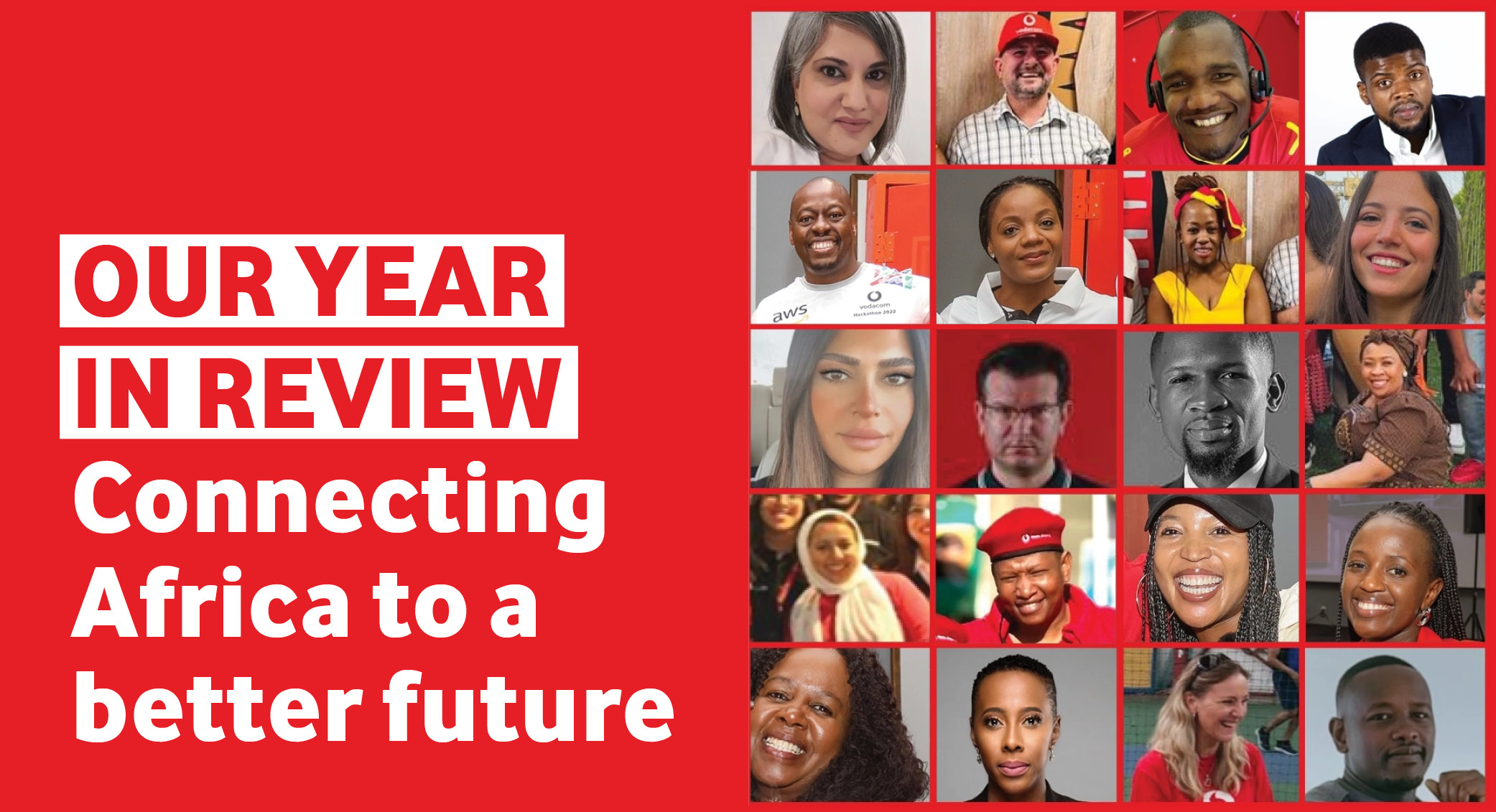
The nine months are just the beginning. These are six Vodacom employees who prove it.
Lusani Nemalili joined in 2019 as a Public Policy and Engagement Specialist. She has since reached Executive level and returned to the programme in 2026 as its Champion – from participant to leader of the same process she first experienced seven years ago.
From participant to Champion in seven years – the clearest single measure of what this programme does to a career at Vodacom.
Malcolm Moodley credits the programme with giving him the ability to translate technical innovation into a clear value proposition. He links that directly to his recognition as a 2025 World Bank GovTech finalist
Now a 2025 World Bank GovTech finalist, Malcolm links the Accelerator directly to his ability to turn technical innovation into something decision-makers could act on.
Naledi Ntuli entered as the only intern ever to qualify for the programme. The Accelerator developed her public speaking, leadership, perseverance, 10x thinking and professional network. She has since progressed to a specialist role.
She entered as an intern – the first and only ever to qualify. She has since progressed to a specialist role.
The programme’s reach goes further. Mphoentle Plaatjie progressed to Senior Specialist, joined the UNGC multi-company Youth Committee and went on to mentor innovators within Vodacom and other UNGC member companies. She was part of Vodacom’s inaugural cohort at One Young World. Limakatso Taoana left the programme with more than a completed project – it inspired a community agriculture initiative, potential PhD research on SDG implementation in Africa and a path toward a sustainability career. Kesh Mulloo continued developing ConnectZero after the Accelerator and took it into the 2026 Vodacom Hackathon, where the team finished as runners-up.
2027, could this be you?
The 2027 programme is opening to a broader set of participants. For the first time, all Vodacom OpCos will be eligible to participate through a regional track structure – a significant expansion of the programme’s reach across the continent.
Lusani started where you might be sitting now. So did Malcolm, Naledi, Mphoentle, Limakatso and Kesh. The question the programme poses is simple: what would you build in nine months?