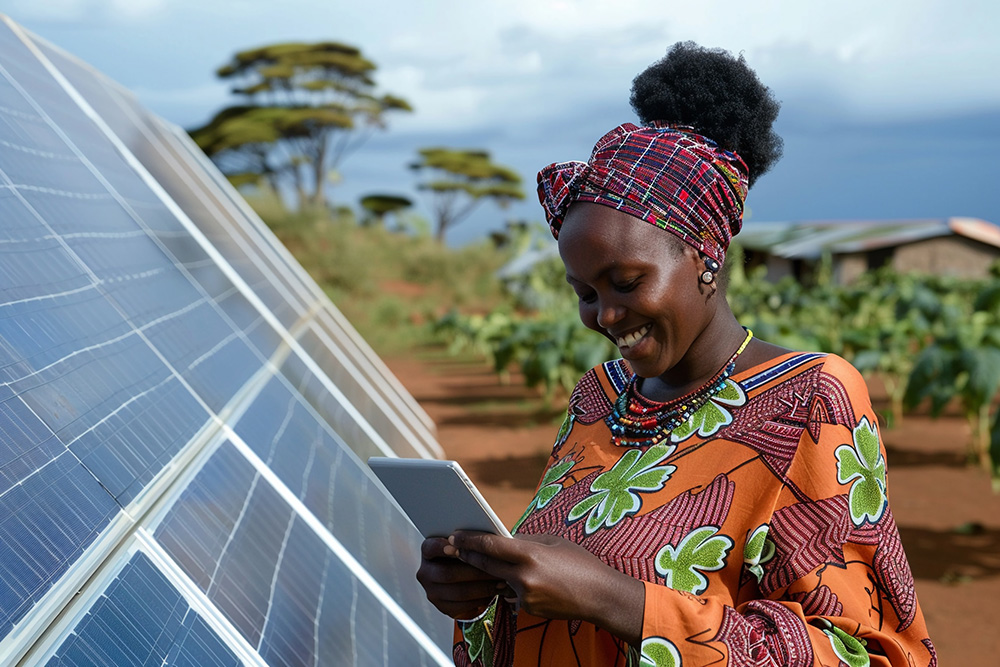
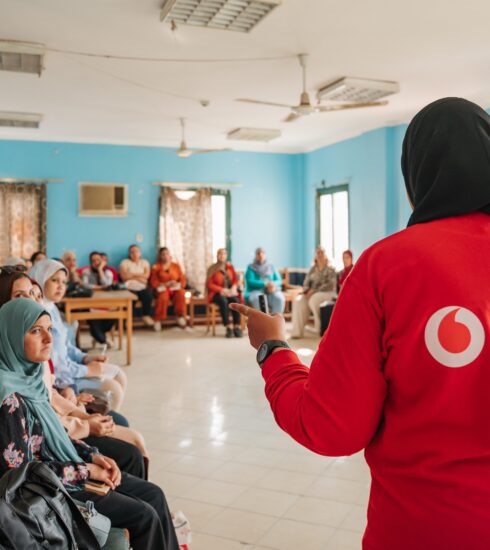
Every day, more people rely on connectivity to learn, work, trade and access services. Our challenge is to carry more data, connect more people and power more progress, while using less energy and producing fewer emissions. Decarbonisation is how we’re making that happen.
Climate change is already personal
In Ethiopia, drought can turn a planting season into a waiting game. In Mozambique, floods can cut off roads, clinics and schools. In Lesotho, changing seasons can make the weather feel less familiar than it did a generation ago.
Climate change is not a distant warning. It affects us all – our families, colleagues, communities, customers and the way that we work. It also reminds us that our purpose – to connect for a better future – must include the future of the planet too.
Africa contributes only a small share of global greenhouse gas emissions, yet it is paying a disproportionate price. Many communities depend on rain-fed agriculture. Infrastructure is often limited. Resources to adapt are stretched. So, when weather becomes more extreme, people feel it quickly and deeply.
The energy challenge behind the climate challenge
At the same time, Africa urgently needs more energy and more connectivity. In our April 2026 report, Decarbonising Africa’s ICT Sector, we note that around 600 million people across Africa still live without electricity, with sub-Saharan Africa most affected.
“What we are really doing,” says Ayman Essam, Chief External Affairs Officer: Vodacom Group, “is navigating one of the most important challenges of our time: expanding digital access and its power to transform lives, while managing pressure on energy systems and supporting a low-carbon transition.”
That is the heart of the challenge: connectivity and sustainability are not competing priorities. They depend on each other.
Real progress, real problems
A mobile network depends on energy. Every base station, switching centre, data centre, store and office needs power to keep people connected. But across many African markets, that power is not always reliable.
Our report highlights how mobile network operators often rely on diesel generators because grid electricity can be weak, unavailable or unstable, especially in remote areas. Diesel keeps sites running when communities need connectivity most. But it is costly, carbon-intensive and not the future we are working towards.
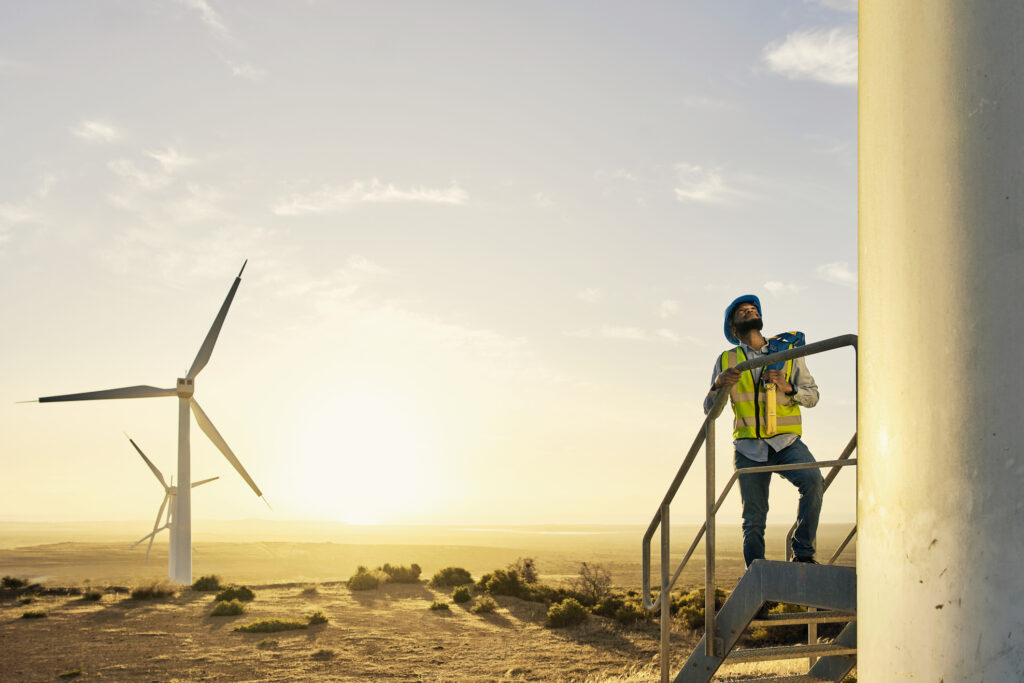
That means decarbonisation is about solving practical, everyday problems: minimising the use of diesel in backup generators, deploying more batteries, replacing older equipment with more efficient technology, cooling network equipment more intelligently and finding cleaner ways to power sites when the grid is unreliable.
Scope 1 emissions are emissions we create directly, such as diesel used in generators or fuel used in company vehicles.
Scope 2 emissions are linked to the electricity we buy to run offices, stores, base stations, data centres and network equipment.
Market-based means we account for renewable electricity we have bought or matched through tools such as renewable energy certificates or power purchase agreements.
The progress is real. In FY2026, we achieved a 78.6% reduction in our Scope 1 and 2 market-based emissions against a FY2020 baseline. Our energy intensity has also improved by 20% year-on-year to 0.27 megawatt-hours per terabyte, while greenhouse gas emissions per terabyte of data fell by 22% year-on-year.
As we move towards Vision 2030, maintaining our emission reduction performance will require significant effort and collaboration, which is why we work with governments, regulators and partners to find sustainable solutions that will support Africa’s just transition.
What “net zero” actually means
Net zero means cutting the emissions we create as much as possible, then finding responsible ways to deal with what remains. For Vodacom’s direct operations, this includes fuel used in vehicles and diesel generators (Scope 1), as well as emissions linked to the electricity we buy (Scope 2). By FY2035, Vodacom aims to reach net zero for our own operations.
Why this matters to you
We are not doing this only because of a target. We are doing it because the people who rely on our networks deserve to know that the company connecting them to the world cares about the world they are connecting to.
Think of a small business using mobile money to trade when cash is hard to move. A student accessing online learning when weather disrupts school. A doctor using digital tools to reach patients in remote communities. A farmer trying to plan around changing seasons. For each of them, connectivity matters. So does climate stability.
As Ayman puts it: “Decarbonisation is about ensuring that millions of people, businesses and public services that depend on our networks know they are partnering with a company committed to building a more resilient Africa.”
The shift to net zero lives in the choices we make about energy, technology, procurement, design and waste. It also lives in the small actions we take every day.
Switch off what you don’t need. Use energy responsibly in offices, stores and network environments. Look for waste, duplication or inefficient ways of working. Share ideas with your team. And when you talk to friends and family about where you work, tell them this story too: Vodacom is growing connectivity while working to reduce its impact on the planet.
Africa cannot afford to wait, and neither can we. That is why Vodacom is all in.
Bongi Mbuli, Group Executive Head: Internal Communications, Vodacom Group Sian Singh, Senior Specialist: Internal Communications, Vodacom Group Content contribution: Our thanks to the internal communications teams and representatives from the Vodacom Group of companies One Spirit is edited, designed and published on behalf of Vodacom Group by Media24 (Pty) Ltd
CREDITS
Cover image: Getty Images & Adobe Firefly Photographs, videos and illustrations: Supplied by Vodacom Group, Adobe Stock, Adobe Firefly, Gallo Images, Getty Images & Google Gemini
DISCLAIMER
This communication is an internal magazine for employees of the Vodacom Group of companies that is intended solely for use by Vodacom Group employees and authorised representatives. Copyright 2026, Vodacom. All rights reserved. While all precautions have been taken to ensure accuracy of information, neither the editor, publisher nor Media24 can be held liable for any inaccuracies, injury or damage that might occur.
All content, information, artwork and opinions are Classified as C1, as per Cyber Security Restrictions.