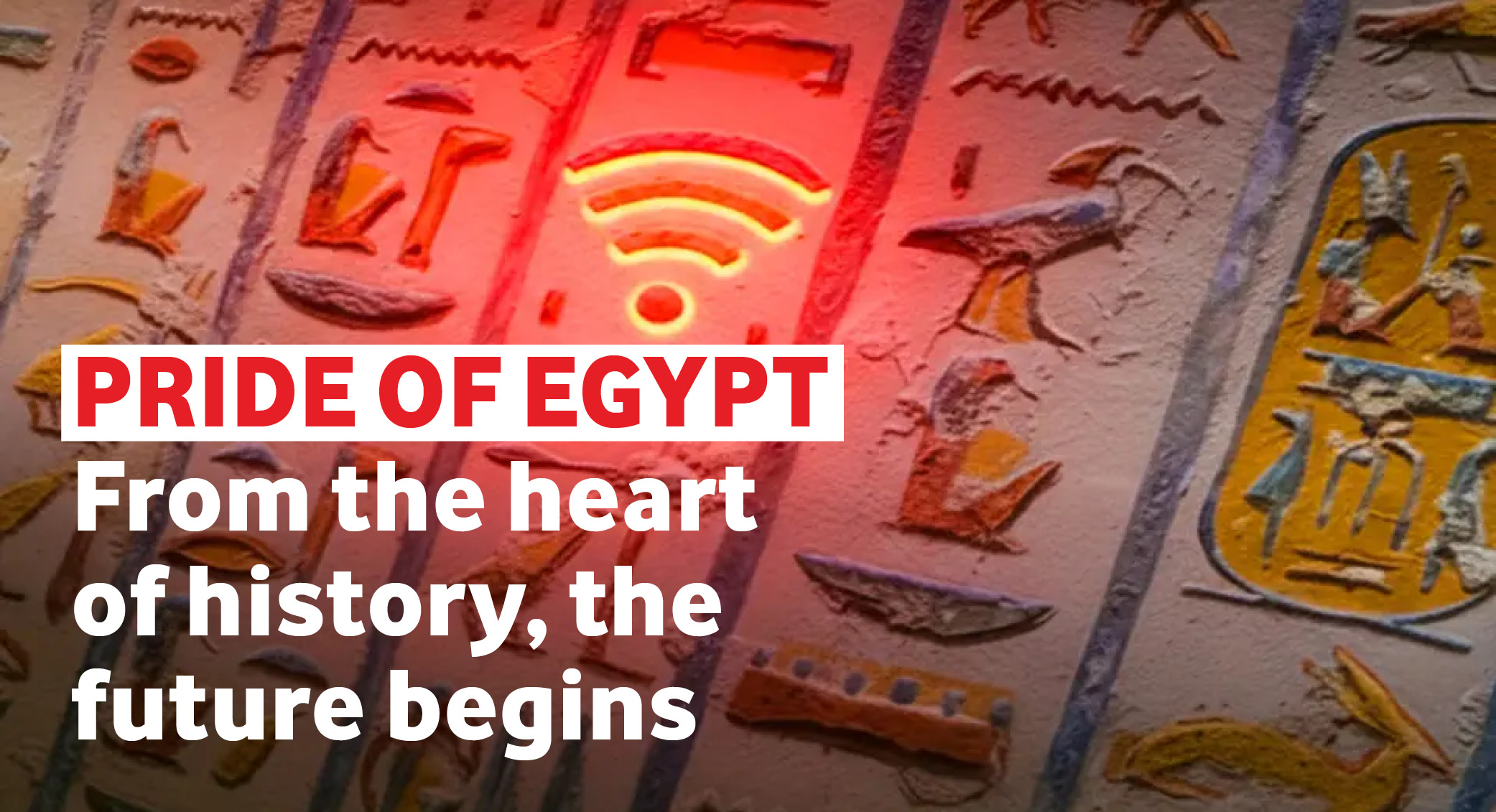
Grand Egyptian Museum: from the heart of history, the future begins
On 1 November 2025, the world’s largest archaeological museum opened its doors at the foot of the Pyramids. Behind its spectacular façade beats a smart digital heart – built by Vodafone Egypt.
When the Grand Egyptian Museum opened on 1 November, visitors encountered more than 100 000 artefacts spanning 7 000 years of history. What they couldn’t see was equally remarkable: a sophisticated digital nervous system connecting every corner of the 500 000 square-metre complex, from lighting and climate control to ticketing and security.
Vodafone Egypt, as the museum’s exclusive technology partner, built this invisible infrastructure – a unified IoT platform that serves as the museum’s “smart brain”. It’s a partnership that demonstrates something powerful: ancient heritage and cutting-edge innovation aren’t opposites. When thoughtfully combined, they enhance each other.
A partnership of great significance
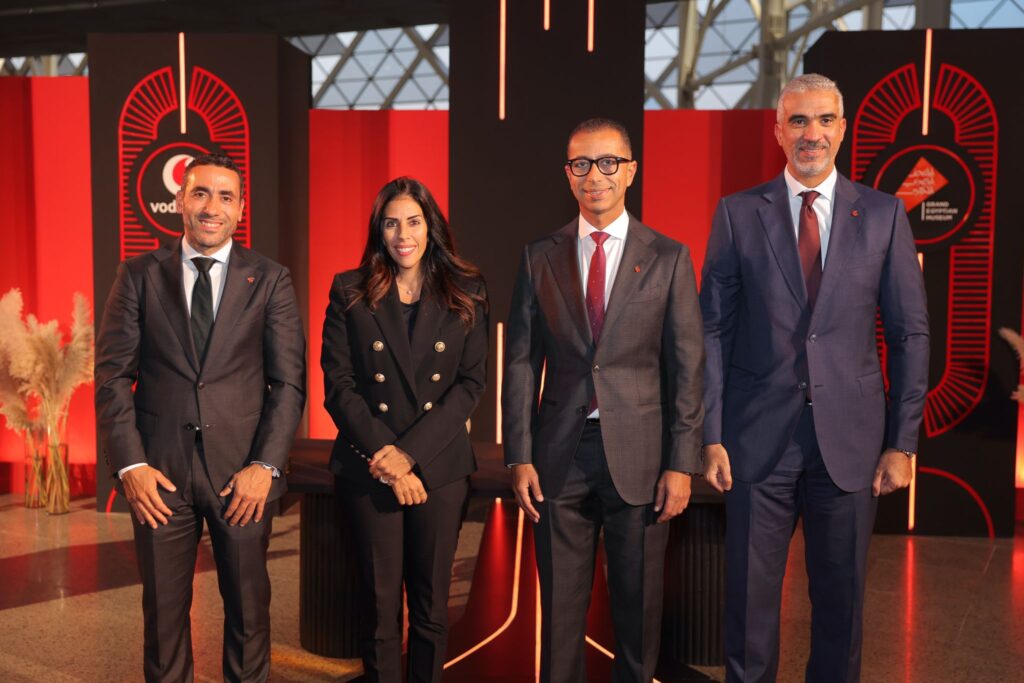
“This partnership marks a national milestone, demonstrating how innovation and heritage can unite to shape the future,” said Mohamed AbdAllah, CEO of Vodafone Egypt and Vodacom International Markets, on being selected as the exclusive technology partner for the Grand Egyptian Museum.
Egyptian President Abdel Fattah al-Sisi called the museum a “gift from Egypt to the world” – and Vodafone Egypt ensured that gift would be protected, presented and experienced through 21st-century technology.
The technology behind the treasures
Working alongside Legacy for Management and Development, the museum’s official operator, Vodafone Egypt integrated 19 separate systems into one intelligent ecosystem. The platform monitors everything: lighting across exhibition halls equivalent to 70 football pitches, energy consumption, air conditioning, elevators, parking, visitor guidance, security, and more.
But the real innovation lies in how these systems work together. Smart sensors maintain the precise environmental conditions required to preserve artefacts that have survived millennia, controlling temperature, humidity and lighting with exacting accuracy. The complete collection of Tutankhamun’s treasures – all 5 500 items displayed together for the first time – requires constant environmental monitoring to prevent deterioration.
An 11-metre statue of Ramses II, a 3 200-year-old obelisk stretching 16 metres, Khufu’s 4 500-year-old funerary boat – each priceless piece benefits from invisible protection provided by Vodafone Egypt’s connected technology.
For the expected eight million annual visitors, this translates into a better experience. Real-time guidance screens help navigate the vast complex. Queue management systems reduce waiting times. Climate control ensures comfort. It’s seamless by design: technology working in the background so history can take centre stage.
A historic moment for all of Egypt
The Grand Egyptian Museum is far more than a building; it’s a statement to the world that Egypt is honouring its ancient legacy while leading in modern innovation.
For Vodafone Egypt, being chosen as the exclusive technology partner represents a profound responsibility: protecting treasures that belong to all of humanity, using the best of 21st-century technology to safeguard 7 000 years of civilisation.
It’s a moment when Egyptian expertise, Egyptian heritage and Egyptian innovation come together – showing the world what’s possible when a nation invests in both its past and its future.
Built for the future
Vodafone Egypt designed the IoT platform with scalability at its core. As new technologies emerge – whether in augmented reality, AI, or innovations not yet imagined – the museum’s digital backbone can adapt and grow without disrupting current operations.
This forward-thinking approach aligns with Egypt’s broader digital transformation strategy and reflects the vision that drives our work across Vodacom Group: technology as an enabler, not an end in itself.
Sustainability and responsibility
Beyond improving efficiency, smart systems also reduce environmental impact. The IoT platform optimises energy usage across the museum’s massive footprint, dimming lights in empty galleries, adjusting climate control based on occupancy, and identifying inefficiencies before they compound.
This commitment to sustainability echoes priorities across Vodacom Group, where environmental responsibility sits alongside connectivity and digital inclusion as core strategic imperatives. The Grand Egyptian Museum becomes a model for how cultural institutions can embrace both preservation and progress.
Further together across the Vodacom family
What makes this partnership resonate beyond Egypt’s borders is what it represents for the broader Vodacom family. The same IoT technology powering the Grand Egyptian Museum is being deployed to optimise agriculture, improve healthcare, enhance urban planning and transform industries across Africa.
From Cape to Cairo, from Lesotho to Tanzania, we’re building digital infrastructure that connects possibilities, not just devices. The expertise Vodafone Egypt demonstrated in this project strengthens our collective capability, proving that African innovation can lead on the global stage.
When visitors from around the world walk through the museum’s pyramid-shaped entrance and ascend the grand staircase lined with statues of ancient Egyptian royalty, they’re experiencing Egyptian history through a lens polished by modern technology. They may not realise that Vodafone Egypt’s sensors are protecting the artefacts they’re admiring, or that analytics are smoothing their journey through the complex. But they’ll feel the difference.
Connecting across time and space
History teaches us who we were. Technology shows us who we can become. The same human ingenuity that built the Pyramids, preserved pharaohs for eternity, and created artefacts of breathtaking beauty now expresses itself through sensors, algorithms and connected systems. When Vodafone Egypt’s platform protects a 4 500-year-old artefact while guiding a visitor through their journey, it’s doing what technology does best – extending human capability across time and space.
The ancient Egyptians believed their monuments would speak to future generations. Now, thanks to Vodafone Egypt, they’re speaking louder and clearer than ever before.
Bongi Mbuli, Group Executive Head: Internal Communications, Vodacom Group Sian Singh, Senior Specialist: Internal Communications, Vodacom Group Content contribution: Our thanks to the internal communications teams and representatives from the Vodacom Group of companies One Spirit is edited, designed and published on behalf of Vodacom Group by Media24 (Pty) Ltd
This communication is an internal magazine for employees of the Vodacom Group of companies that is intended solely for use by Vodacom Group employees and authorised representatives. Copyright 2026, Vodacom. All rights reserved. While all precautions have been taken to ensure accuracy of information, neither the editor, publisher nor Media24 can be held liable for any inaccuracies, injury or damage that might occur.
All content, information, artwork and opinions are Classified as C1, as per Cyber Security Restrictions.