


Powering Africa’s creative economy
The creative economy is here, growing, and generating measurable economic impact. Vodacom’s role extends beyond connectivity provision to ecosystem enablement, youth empowerment and community building. As Africa’s creative talent scales globally, we’re both the network they use and the foundation they build upon.
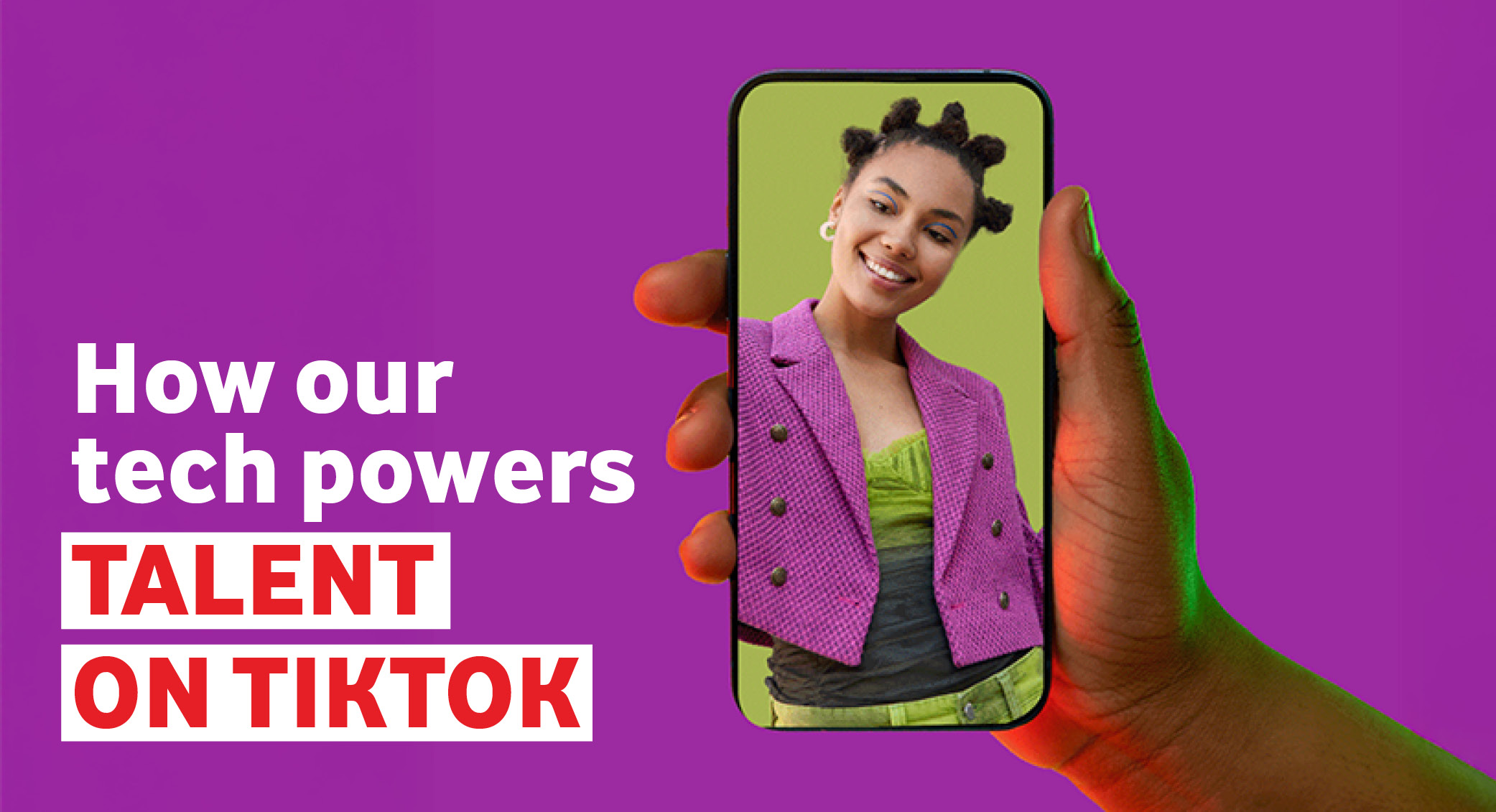
This creative revolution is perhaps most visible on platforms where African voices are reaching global audiences. TikTok exemplifies this transformation – where local creativity meets worldwide opportunity, powered by the connectivity that makes it all possible. With data bundles, awards and connectivity, Vodacom is helping creators to learn, earn and scale.
Connecting Africa, one TikTok video at a time
It’s more than just another app competing for screen time – TikTok has become a creative economic engine in Africa. With South Africans spending 26 hours and 39 minutes per month on the platform and 3 000 creators set to be trained across sub-Saharan Africa, the growth of TikTok isn’t a trend we’re watching from the sidelines. It’s a movement we’ve enabled through affordable data, strategic partnerships and youth-focused initiatives that turn digital dreams into economic opportunities.
@tiktok.southafrica Nikhona? We've got something exciting to share that promises to keep you glued to your seats over the next few weeks ⭐ We've teamed up with @PhilMphela to chat to some of your favs who are truly #AfricanAllStars! Catch exclusive interviews, behind-the-scenes moments, and inspiring stories from some of SA's finest TikTok creators. You don't want to miss out, so stay tuned for more. #AfricanAllStars #WhatToWatch ♬ original sound – TikTok South Africa
More than a trend
The numbers tell a compelling story. TikTok has secured its position as the third most-used social platform by South African internet users, with 76.9% penetration and staggering 34% year-on-year growth by early 2025. More importantly, it leads in time spent on devices, surpassing YouTube’s 25 hours 15 minutes per month by over an hour.
TikTok’s rise ties in with many Vodacom goals: enabling Africa’s digital transformation, creating economic partnerships, especially among the youth, and driving engagement and loyalty through the use of technology.
Across Africa, TikTok is consistently ranked as the second most used platform after Facebook, according to various recent studies. Globally, Egypt has the ninth most active TikTok users of any country, with 41.3 million in 2025. In Kenya, it was ranked the third-most accessed app on the internet after YouTube and Facebook in 2024.
From hype to jobs: skills, training and monetisation
TikTok’s newly upgraded #LevelUpAfrica programme aims to transform social media posts into sustainable livelihoods. The eight-month curriculum will train 3 000 creators across sub-Saharan Africa in content strategy, brand partnerships and monetisation tactics.
@tiktok.southafrica Celebrating the icons of tomorrow, today. Welcome to the TikTok Awards Sub-Saharan Africa 🌍 #TikTokAwards ♬ original sound – TikTok South Africa
“We are not just opening doors – we are building pathways for creatives to thrive, ensuring they have access to the professional tools, community connections and revenue opportunities they need to turn their passion into their profession,” says Boniswa Sidwaba, TikTok’s Head of Content Operations for sub-Saharan Africa. The programme addresses a critical gap: while African creators show exceptional creativity, many lack the business acumen to monetise their talents effectively.
The stakes are significant – G20 Insights, a policy recommendation hub, estimates the creative economy could reach 10% of global gross domestic product (GDP) by 2030.
This growing creator ecosystem promises sustained data demand, enablement opportunities for small and medium-sized businesses, and premium service upsell potential.
Key TikTok stats
- 26h 39m: Average monthly TikTok usage in South Africa
- 34% or 5.93 million users: year-on-year user growth in South Africa by early 2025
Number of active users in:
- Northern Africa: 90.9 million (5.7% of the global total)
- Western Africa: 41.5 million (2.6%)
- Middle Africa: 11.6 million (0.7%)
- Eastern Africa: 21.9 million (1.4%)
- Southern Africa: 23.4 million (1.5%)
Source: Official TikTok data via DataReportal.com
African TikTokers busting the “brain rot” narrative
Think TikTok dumbs you down? These African creators, and countless others, prove otherwise. Behind the stats are human stories that illuminate TikTok’s positive potential.
- Kenya’s Dennis Ombachi (@TheRoamingChef) leveraged TikTok to reinvent himself after retiring from Sevens Rugby, becoming a global cooking sensation and winning a Best African Content Creator Award.
- Egypt’s Amr el Hady (@amrelhady), a leading food creator on TikTok with over two million followers, won a TikTok Middle East and North Africa (MENA) Award in 2022, reflecting his significant impact in the culinary and entertainment world.
- Tanzania’s Fanuel John Masamaki (Zerobrainer0) is redefining sports content on TikTok. His signature beige blazer and comedic twist on football make his videos instantly recognisable.
- Dr. Siyamak Saleh (@doctor.siya) from South Africa combats health misinformation, proving TikTok’s utility beyond entertainment.
- Educational creators like South Africa’s @motsomike, who simplifies AI and tech concepts, and Kenya’s Priscilla Wanjiru Karanja (@tr.cillah), who expands classroom impact online, show how the platform can democratise knowledge sharing.
- Melissa (@dpilot_onthegram), a trailblazing South African pilot and creator, challenges aviation stereotypes while inspiring young women to pursue careers in science, technology, engineering and mathematics (STEM).
- South African singing sensation Tyla’s (@hernametyla) hit song “Water” transitioned from TikTok phenomenon to Grammy breakthrough.
- Dan Corder (@dancorder) uses his magnetic presence and sharp wit to encourage civic engagement. He used his platform during the South African elections in 2024 to fight misinformation and teach the masses how to spot fake news.
- Rukia Bulle (@rukia_bulle) from Kenya gives a behind-the-scenes glimpse into the world of journalism. Through her unique storytelling, she simplifies the complex world of news reporting.
- Mbali Nhlapho (@mbalinhlaponhlapho) from South Africa is changing the game in #CleanTok with her cleaning business. Trending on TikTok since 2024, she’s inspiring users with her passion for cleanliness and entrepreneurship.
- Kenya’s Ann Muhia (@anne_muhia), known as “The Unprepared Entrepreneur”, has been building a community of fellow entrepreneurs through her authentic storytelling.
- Adam Sebastian Fempe (@fempe), a Tanzanian travel creator, conducts public interviews with tourists, offering a unique glimpse into travel hotspots.
Sources: DataReportal.com, GeoPoll.com, Meltwater.com, TikTok