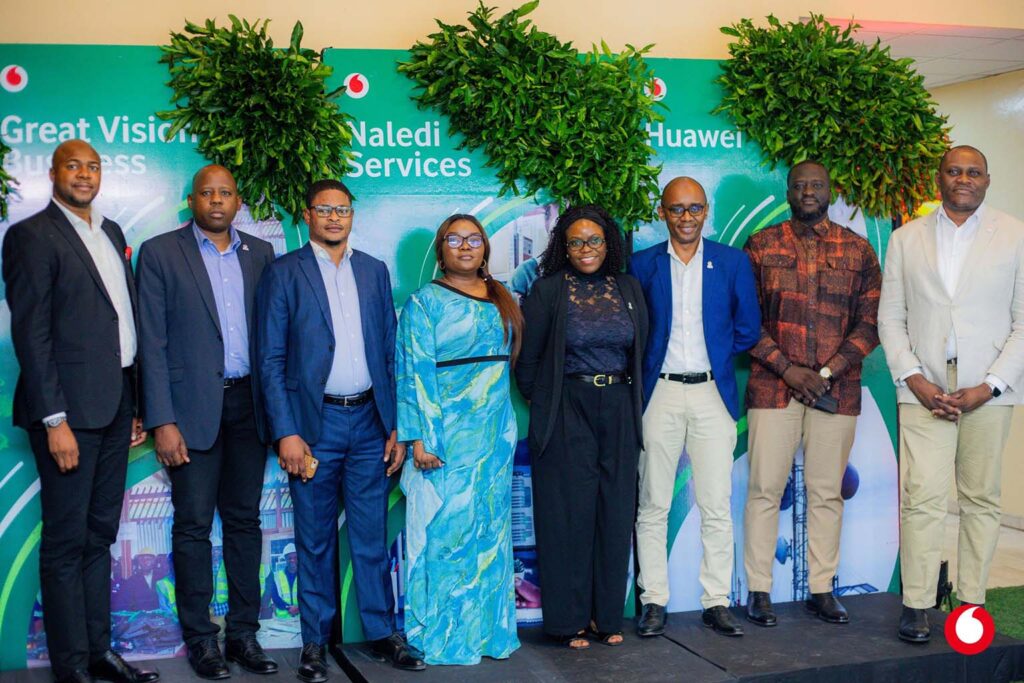
Vodacom DRC, with partners from the environmental sector, the Congolese government and the UN Global Compact, recently held the first annual conference dedicated to the Management of Waste Electrical and Electronic Equipment (WEEE), highlighting our commitment to promoting sustainable solutions.
What is WEEE?
WEEE stands for Waste Electrical and Electronic Equipment, referring to devices that are no longer used or are out of service, such as:
Entertainment devices (televisions, game consoles, etc.).
The annual WEEE conference is a response to the pressing challenges posed by this type of waste on modern societies.
By bringing together industry specialists, government representatives and civil society actors, the event aims to explore innovative solutions while educating the public on WEEE management.
Vodacom DRC produced a video that encapsulates our commitment to protecting the planet, titled “Heroes of Zero Waste”.
62 million tonnes of WEEE produced globally in 2022
Only 22.3% collected and formally recycled
82 million tonnes forecast to be produced by 2030
Taking on the challenge
Speaking at the event, Pamela Ilunga, Deputy CEO of Vodacom DRC, said that for several years, protecting the planet had been at the heart of the company’s strategy.
The team has worked consistently to raise awareness of environmental protection, the adoption of green energy, waste management, protecting ecological heritage and launching initiatives to reduce carbon impact.
Pamela stressed that WEEE represents a major challenge for modern society. “In 2022, approximately 62 million tonnes of electronic waste were produced worldwide. But only 22.3% of this waste was collected and formally recycled.” By 2030, global production of WEEE could reach 82 million tonnes.
“This waste contains not only valuable materials that can be recycled, but also very hazardous substances that, if not properly treated, can have devastating effects on our environment and especially our health.”
Vodacom DRC has already implemented collection and recycling programmes for used electronic equipment, and supports research and innovation initiatives aimed at developing new processes and partnerships for the treatment and recycling of WEEE.
“I am incredibly proud of the Vodacom team for taking a bold step forward on the path to sustainable development in the DRC. As the Country Lead for Sustainable Development, I firmly believe that leading by example is the most impactful way to inspire meaningful change. This journey is a shared mission. Together, we’re proving that sustainability is not just an ambition – it’s a way of life.”
Committed to protecting the planet
Vodacom DRC has been a pioneer in the energy transition of the sector, undertaking several initiatives to decarbonise operations and provide clean solutions to the population it serves:
Deployment of nearly 900 fully solar-powered rural connectivity sites since 2013
Elimination of over 95% of paper in administrative procedures through digitisation
Implementation of an internal energy transition policy and reduction of its carbon footprint
Adoption of 100% electric vehicles in its fleet
Promotion of the M-PESA financial service as a dematerialisation tool for payments and pollution reduction.
Bongi Mbuli, Group Executive Head: Internal Communications, Vodacom Group Sian Singh, Senior Specialist: Internal Communications, Vodacom Group Content contribution: Our thanks to the internal communications teams and representatives from the Vodacom Group of companies One Spirit is edited, designed and published on behalf of Vodacom Group by Media24 (Pty) Ltd
This communication is an internal magazine for employees of the Vodacom Group of companies that is intended solely for use by Vodacom Group employees and authorised representatives. Copyright 2026, Vodacom. All rights reserved. While all precautions have been taken to ensure accuracy of information, neither the editor, publisher nor Media24 can be held liable for any inaccuracies, injury or damage that might occur.
All content, information, artwork and opinions are Classified as C1, as per Cyber Security Restrictions.